Three by Three: Guest Artists in Focus
QUESTION 2: Holography once required you to think about space, light, and interference on a microscopic level. What did that world teach you about their “behavior” at a macroscopic level.
ANSWER 2. It was my good fortune to be detailed out to NASA for several years as a Senior Research Scientist. One of my investigations took me to visit Dr. Yuri Denisyuk in search of a way to photograph and document micro-meteorite damage to the "skin" of spacecraft. He had advanced 4-D laser holography to produce normal-light holograms. A major advance, though the micrometeorite indentures and punctures were often so small, often below the micrometer range, I needed a way to apply this visual technology. The result was normal-light "interference" holography, whereby the differences between two stereograph holograms could be optically recorded and later the deformation calculated down theoretically to the Angstrom level, with more dimensional "standout" definition. The process reminded me of how much technological image progress still lay ahead and to imagine in my mind's eye how this might affect tomorrow's arts, especially within moviemaking.
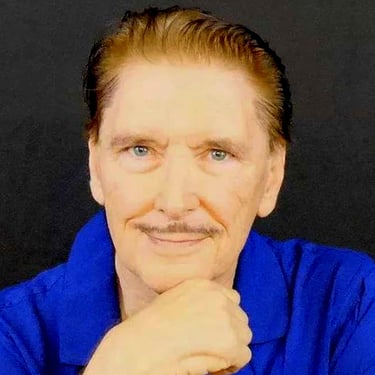
Daniel S. Janik
Multi-Dimensional Explorer
MEDIUM: books; 2 and 3D photography; tempura/mixed media paintings; holography; films
BIO: A renaissance man currently in Hawaii, Daniel S. Janik is a physician, researcher, educator, author, poet, book publisher, photographer, artist, dancer, actor and independent movie producer. Science and arts; arts and sciences.
Born into a USA military family, Janik traveled all fifty states, lingering in Alaska while still a territory. At 16, he authored his first novella, The Parabolic Curve. In college, he majored in literature and chemistry, writing the prize-winning poems Everyway and The Water Faucet Man. Awarded both an MD and MPH degree, he formally specialized in public health/preventive medicine. The mid-1980's found him working with NASA, researching biological water recycling/reclamation for earth and in space. Most recently, he was awarded a PhD in Education in linguistics. Arts and sciences; sciences and arts.
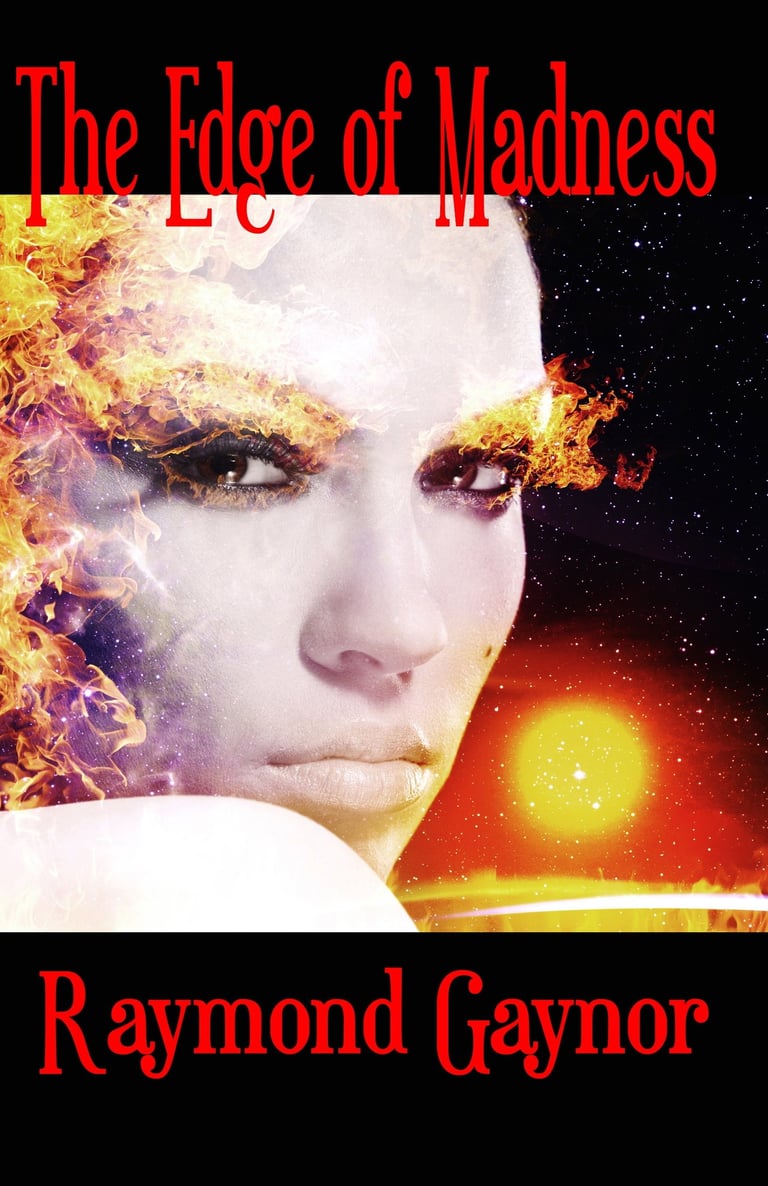
He is co-author of two award-winning techno-thrillers, Total Meltdown with William Maltese, and Quantum Death with A. G. Hayes both under the pen name Raymond Gaynor, publishing the multi-award-wining erotic "Kingsley and I" trilogy under the pen name Gary Martine.
Currently he is exploring multi-dimensionalism in the arts, sciences and film.
WEBSITE: DanielSJanik
QUESTION 3. Your encounter with Dr. Yuri Denisyuk and your holography mission changed the way you perceive dimensional space. What’s one principle from that experience that has quietly shaped your art ever since?
ANSWER 3. My brief association with Dr. Denisyuk left me with a deep curiosity about the limits, if any, of dimensionality in terms of enduring expression, especially within the film arts, be it acting or production. It's since led to a fascination with the whole concept of "infinity," which I began pursuing early on, and have continued pursuing throughout my life. Like Newton's Calculus using an "infinity" construct to describe not only ongoing but constantly increasing motion, or the Fibonacci sequence inherent in biology and closely related to the ancient Greek "natural" architectural "Golden Ratio." In my various art films like WINNOWING where I explore the dialectic - black and white, shadow and illusion (in film parlance "tricks"); in OTOSOTU (On The Other Side Of The Universe), where I explore "depth" backgrounds, musical dimensionality; in AUDIENCE WITH A VAMPYRE, where I audaciously explore camera angle ("cheating") and time distortion; in WHAT DANCE AM I?, where I explore movement through dance.
So, "Why?" My answer: "I don't want to die; but if I must, I want to be remembered, and remembered in the richest and most vivid way possible, thank you."
QUESTION 1. Your lifelong fascination with dimensionality—from books to photography to films — has deep roots. As a writer, photographer, artist, actor and film producer, you've mentioned being asked the quintessential yet elusive question, “Why?”
ANSWER 1. The simple answer is that I've been aware from early childhood that we all die, the sense of impending demise increasing slowly but constantly with age. For me, writing, photography, art, acting and ultimately films are all steps along a common pathway to an increasingly multi-dimensional immortality. Books at their basics, can preserve a single dimensional, uniquely linguistic cultural heritage. Photography and painting both offer a two-dimensional afterlife. Shadowboxing, sculpture, stereography and holography, all fervently explored over time in that order offer a three-dimensional eternity. But it's "movies" that, as an art form, open the door to a fourth dimension by embracing time. In audiovisual art form terms, time is experienced as movement, the very "breath of life." Called by some the seventh art form, whether “realistically” or “abstractly” framed and portrayed, films are my personal pathway to individual immortality.
And yet...the answer is also quite complex. Viewed from a purist "art form" perspective alongside an unwavering commitment to "no graphic violence," acting and film producing provide a moral aspect to every generation of viewer, now and in the future, something decidedly lacking in the film as well as many other industries today. Viewed, on the other hand, purely from a technological perspective. literary immortality is embedded in substrate evolution - from paper to digital and on to audio platforms, whereby 2-D photography depends on the ongoing evolution of photo camera and viewing formats. The same can be said for 3- and 4-D art forms, limited as they are by capture and projection evolution. Then there is that additional element - what I like to call “illusion.” Life in its fullest is more than a science or humanity. Intangibles like spirit, hope and empathy add a "+" dimension.
Still, in answer to the question, “Why?” I am left with this circular answer: "I don't want to die; but if I must, I want to be remembered."
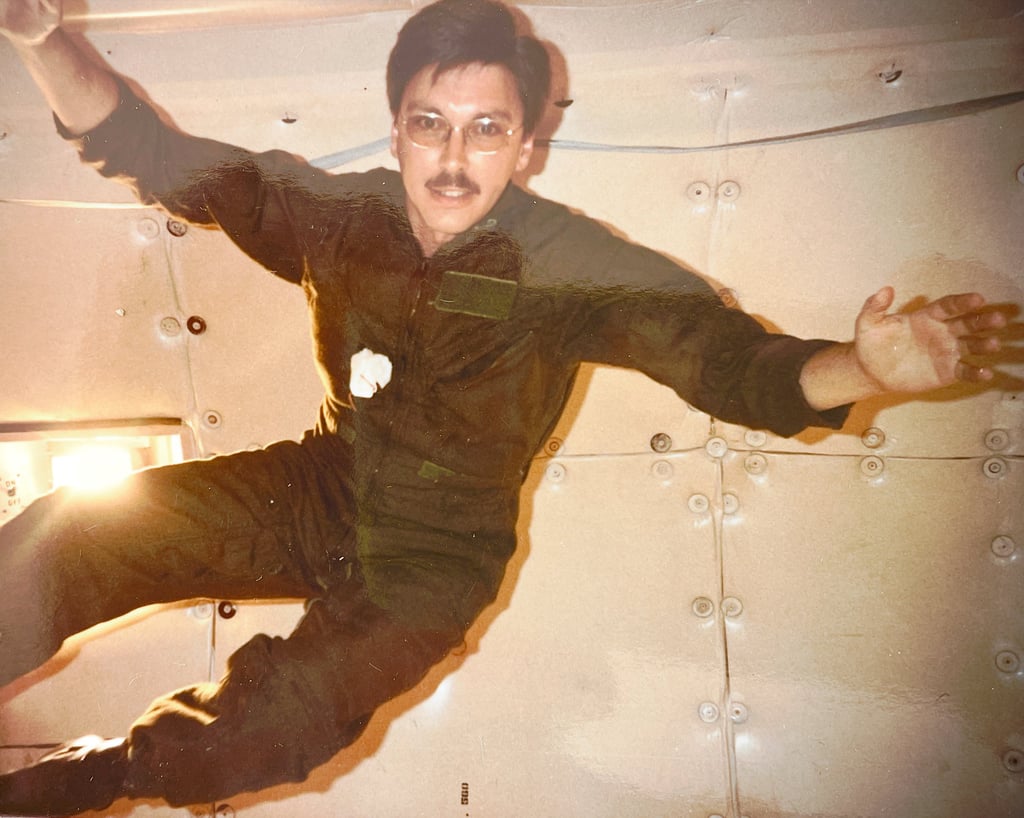
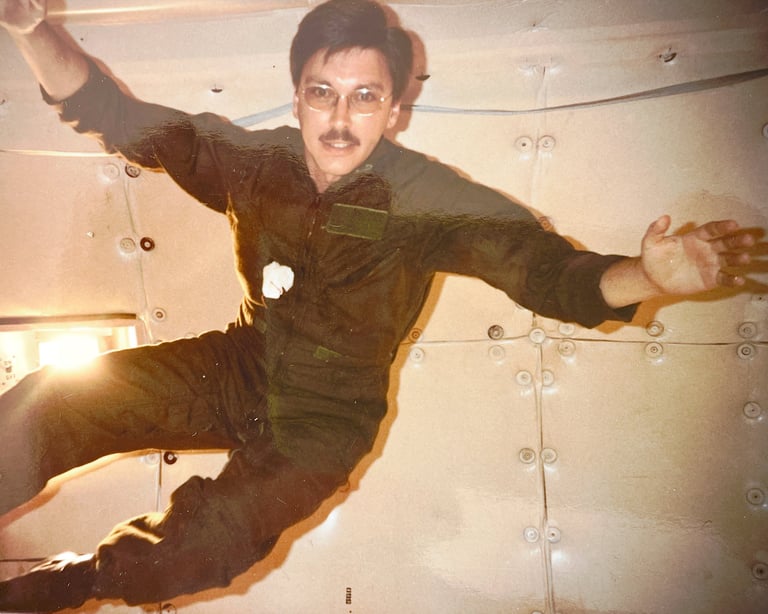
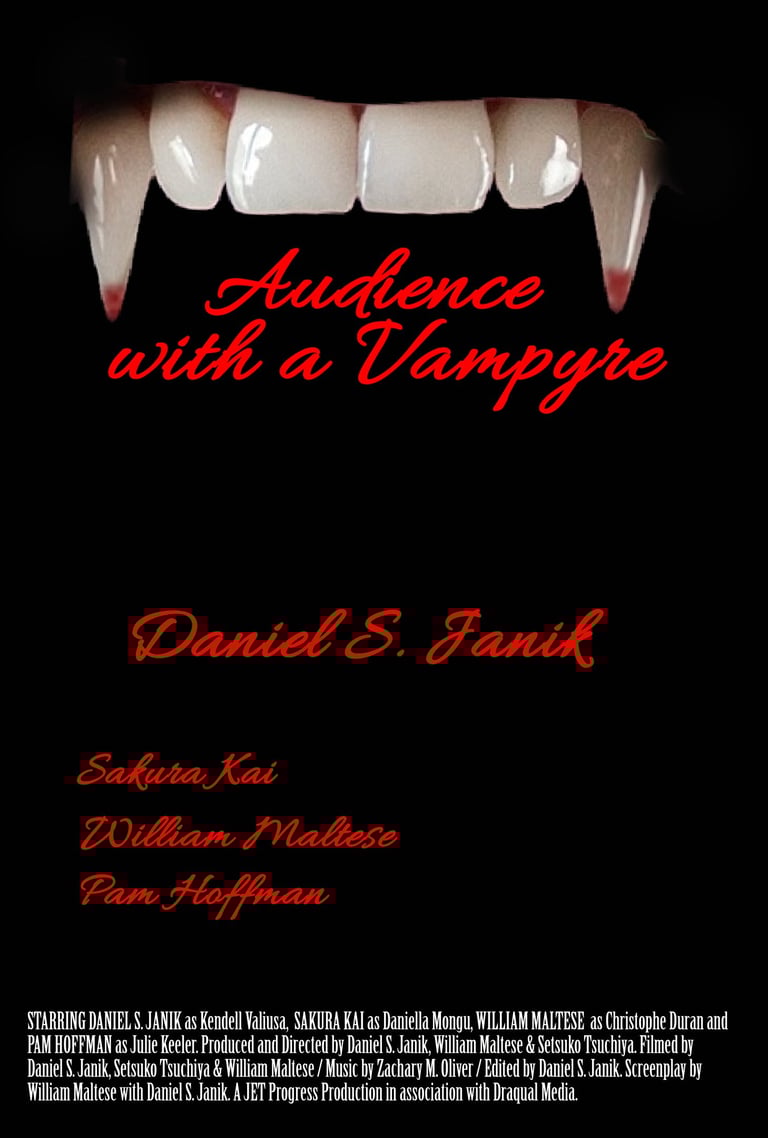
Exploring Dimensionality in Microgravity
All copyright and reproduction rights are reserved by Daniel S. Janik.
Artwork may not be reproduced in any form without the artist's express written permission.
CLICK IMAGE FOR FULL VIEW
CLICK IMAGE FOR FULL VIEW
CLICK IMAGE FOR FULL VIEW
All images and written materials on this website are protected intellectual property. All copyright and reproduction rights are reserved by KC Magrath.
Artwork may not be reproduced in any form without the artist's express written permission.
Any use of this content to train, develop, or operate generative artificial intelligence or machine-learning systems-whether commercial or non-commercial—is expressly prohibited without prior written permission.
Photos by KC Magrath are reduced in resolution and watermarked. Purchased images will be at the resolution listed in the store and without watermarks.
Purchased digital downloads are intended solely for personal use at the prices listed.
For commercial use or inquiries about designating a photo as a Limited Edition, please email.
Licensing Agreement.
Privacy Policy
Cookies Policy
Giveaway1 & Terms