Three by Three: Guest Artists in Focus
QUESTION 2. During performances, audiences become part of the instrument itself. How does that unpredictability influence the way you construct or rehearse these sensor-based canvases?
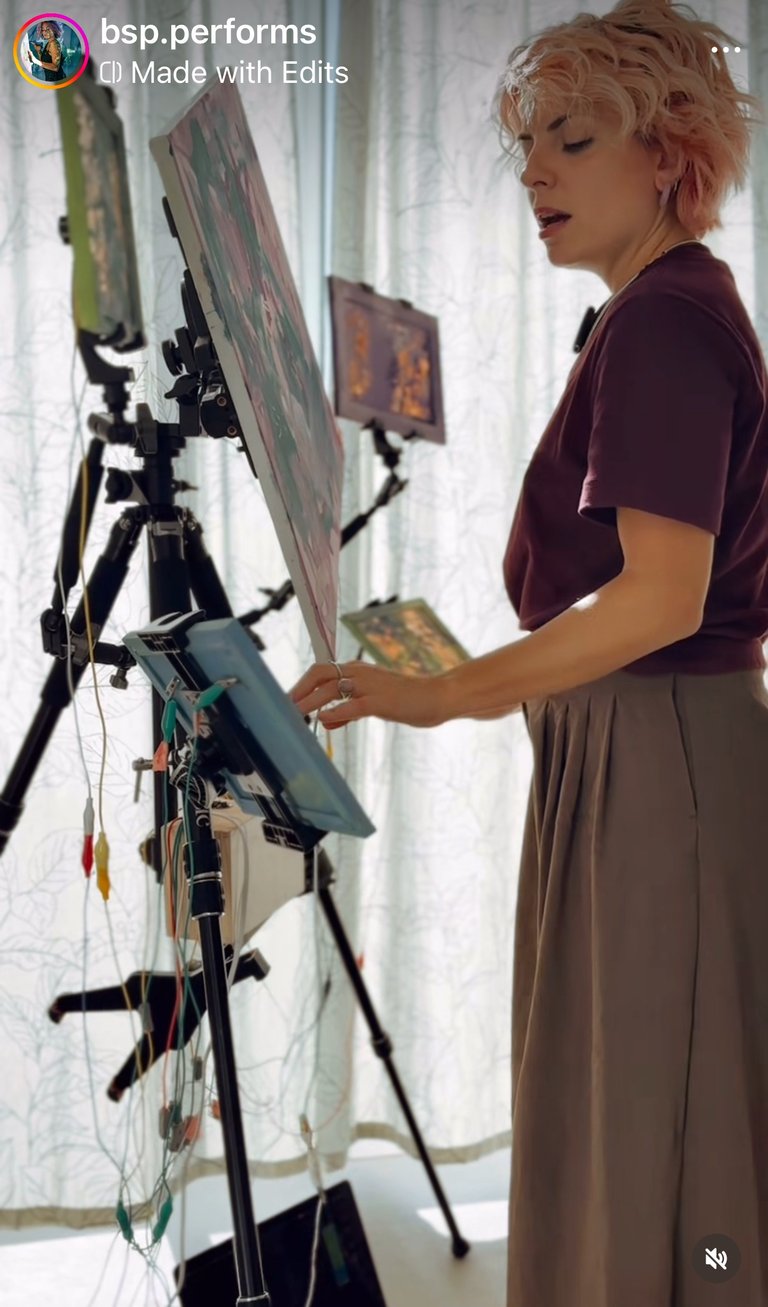
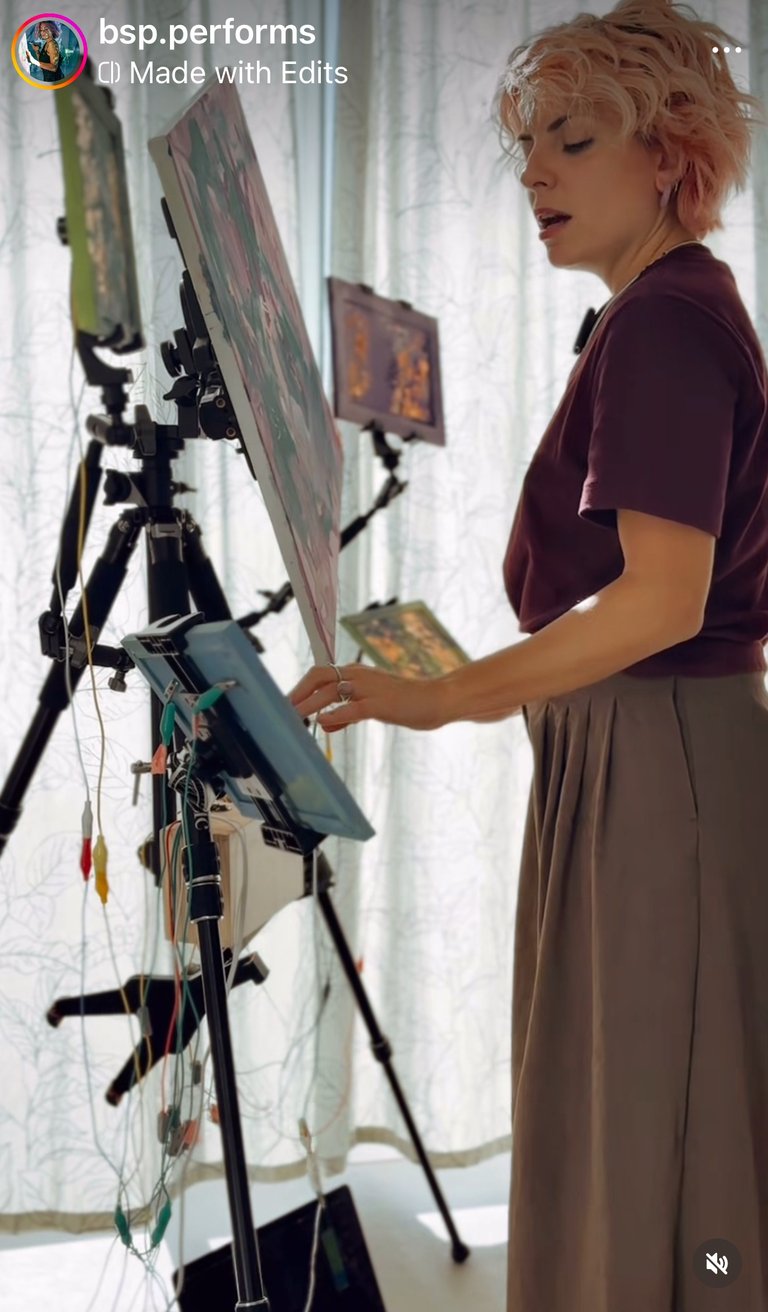
ANSWER 2. The unpredictability is the point. When I design a sensor-based canvas, I’m not building a closed musical system. I’m leaving space for the audience to step inside the work and alter its direction. I think of each canvas as a proposal rather than a finished composition: I decide the tonal palette, the textures, the sensitivity of the triggers, but the final “performance” only happens when another pair of hands completes the circuit.
A powerful example of this was Liquid Sounds, an interactive installation I created for an Arts Council–supported project in the UK. In that context, the audience wasn’t just participants; they became the artists. They chose the colour that corresponded to the sound that spoke to them the most, touched the responsive canvases, and suddenly something shifted. People who had never held a brush felt as if they were generating music; they became the agents of translation between sound and colour.
The room transformed. Conversations opened up about neurodiversity, perception, and the beauty of sensing differently. Several people told me, often quietly and almost apologetically, that they also had forms of synaesthesia but never knew how to talk about it, or felt embarrassed to share it. In that moment, through a simple gesture of touch and sound, they felt seen. That experience shapes how I rehearse and build every new canvas: not as an object to control, but as a system that needs the unpredictability of human presence to be complete. My role is to prepare the conditions: the audience’s role is to make the unexpected happen.
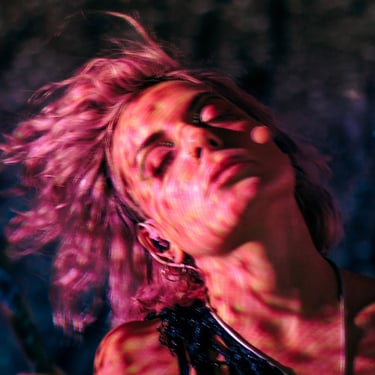
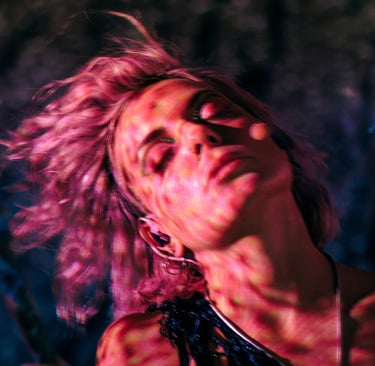
Francesca Brigandi
Performer - Stage Name: BSP
MEDIUM: voice, painting, sensor-activated canvases, sound-responsive installations
BIO: I’m BSP, a synesthetic performer based in Madeira (Portugal), working where painting, sound, and technology meet. My practice explores how colour can translate emotion and how music can become tactile, visible, and embodied. I create sensor-activated canvases and live performances where my voice and brushstrokes interact with custom touch-responsive systems, turning the act of painting into an instrument. My work often examines the ocean, climate acoustics, and the unseen textures of sound, and it has been featured in the Tate Modern, Venice Biennale and on Sky Arts in the documentary "The Blending of Senses". I’m committed to non-AI artistic creation; every element of my work is made by hand, voice, circuitry, and real human perception. I believe art is an experience, not a simulation.
INSTAGRAM: @BSP.Performs
QUESTION 3. How has the technology inside your canvases evolved over time, and what new possibilities are you hoping to unlock in future versions of your “canvas orchestra”?
ANSWER 3. The earliest versions of my canvases were fragile creatures, more like experimental prototypes than instruments. They were temperamental, unpredictable, and constantly breaking in my hands. But with each iteration, the system became more refined: the sensitivity of the touch sensors, the precision of the triggers, the integration between paint and circuitry. Now the canvases respond like living instruments, tactile, reactive, almost conversational. And that evolution is opening the door to a new chapter.
Over the last few months, I’ve been developing a performance rooted in ocean soundscapes, climate change and acoustic pollution. Because my research has always revolved around sound and colour, I started to wonder: what if technology could give people the power not to add sound, but to remove it? In this new work, the audience will be able to “clean” the ocean soundscape through touch. Every press of the finger will subtract noise (sonar, ship engines, motors, industrial frequencies), slowly revealing the true voice of the ocean underneath. It becomes an act of care, of listening, of responsibility. The canvas turns into a tool for environmental empathy. This direction has been strengthened by my recent selection for the UNESCO “Decenio del Océano” residency, in collaboration with Moku Art Studio and Mango. The programme focuses on ocean literacy and artistic innovation, and it is giving me the time, space and support to refine this new sonic/interactive technology into something both poetic and scientifically grounded.So the future of the “canvas orchestra” is not just about more complex sensors or spatial sound, though those are coming too. It’s about creating instruments that can shift behaviour, deepen perception, and allow people to feel, through their own hands, the delicate balance between noise, silence, and the living world.
I'm also experimenting with new materials that can conduct touch in unexpected ways. My dream is to create a full sensorial environment, where the whole space, not just the canvas, becomes playable.
QUESTION 1. When you build a “canvas orchestra,” how do you decide which colors, textures, or brushstrokes will trigger certain tones or sonic qualities?
ANSWER 1. I choose colours the way a composer chooses instruments. Some colours have a weight, a temperature, a “behaviour” that corresponds naturally to a certain timbre. A deep ultramarine will never sound like a bright cadmium yellow; the emotional temperature is completely different. The textures matter too: a rough surface wants percussive tones, a smooth one wants resonance. I test everything by touch, by instinct, and by synesthetic association. The goal is always the same: The sound must reveal the colour, and the colour must amplify the sound.
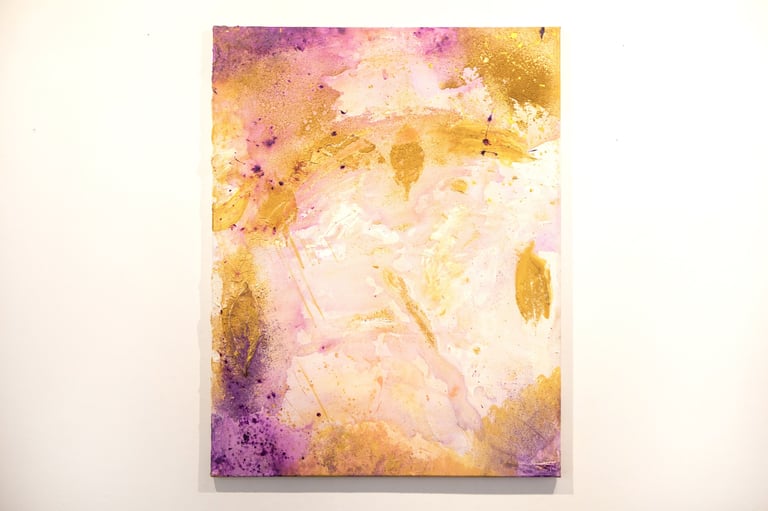
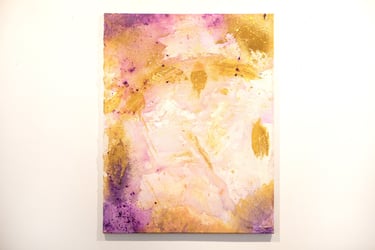
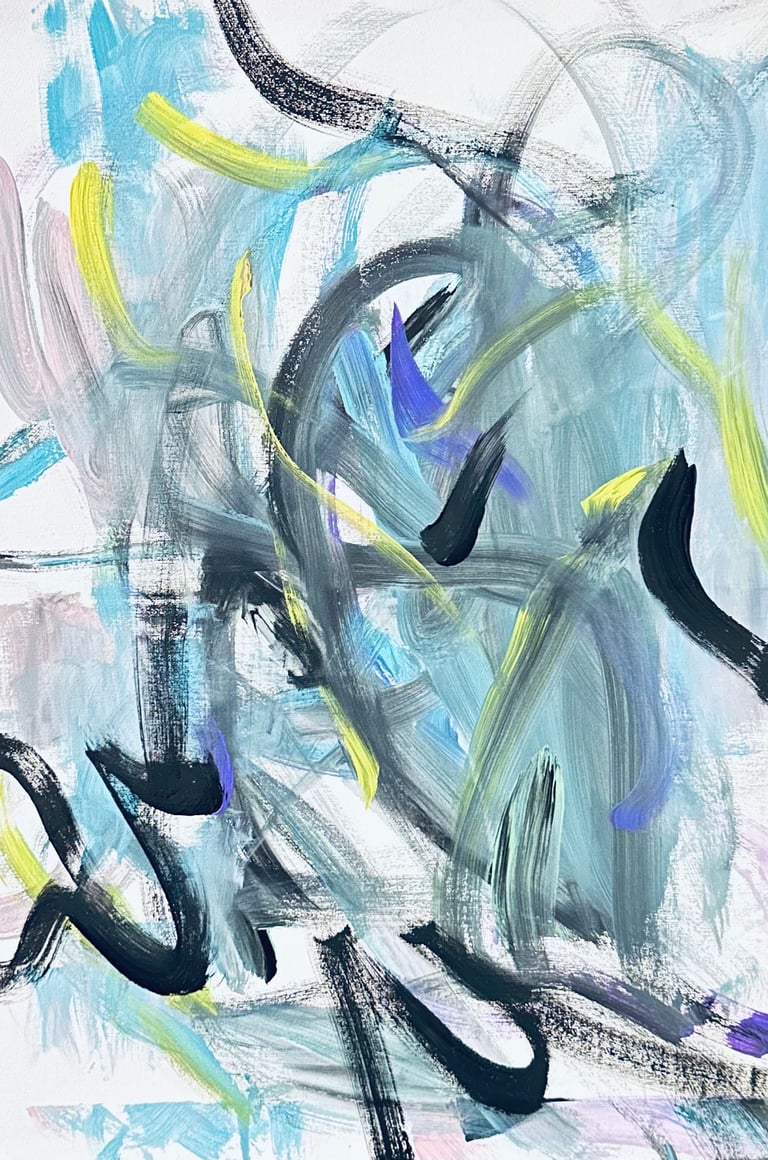
"Island Bloom"
"The dance", made during performance in the Tate Modern, London.
All copyright and reproduction rights are reserved by Francesca Brigandi / BSP.
Artwork may not be reproduced in any form without the artist's express written permission.
VIDEO
CLICK IMAGE FOR FULL VIEW
CLICK IMAGE FOR FULL VIEW
All images and written materials on this website are protected intellectual property. All copyright and reproduction rights are reserved by KC Magrath.
Artwork may not be reproduced in any form without the artist's express written permission.
Any use of this content to train, develop, or operate generative artificial intelligence or machine-learning systems-whether commercial or non-commercial—is expressly prohibited without prior written permission.
Photos by KC Magrath are reduced in resolution and watermarked. Purchased images will be at the resolution listed in the store and without watermarks.
Purchased digital downloads are intended solely for personal use at the prices listed.
For commercial use or inquiries about designating a photo as a Limited Edition, please email.
Licensing Agreement.
Privacy Policy
Cookies Policy
Giveaway1 & Terms