Three by Three: Guest Artists in Focus
QUESTION 2. Your botanical motifs feel both scientific and poetic, like specimens suspended in memory. What early experience with nature or observation continues to shape the way you interpret organic forms through stitch?
ANSWER 2. My passion for studying plant forms, animals and insects might be attributed to my biological research scientist mother, and my ability to zero in and focus on detail to my engineer father. I have always been fascinated by the color, shape, pattern and diversity found in nature. Taking a walk for me is never about exercise but about what I might see on the way, everything is potential inspiration for creative pursuit.
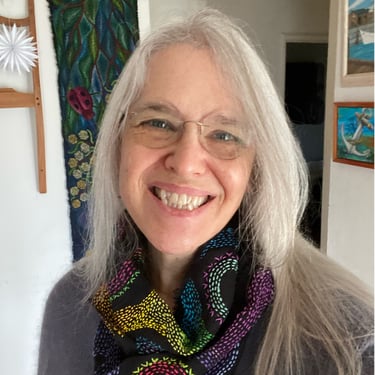
Judy Coates Perez
Mixed Media Textile Artist
BIO: I am a mixed media textile artist based in Davis, California. For over 30 years, my practice centered on painted art quilts, a medium I deeply loved for its expressive potential. In 2020, my work took a significant turn toward hand stitching on linen—first as a way to stay creatively grounded while traveling, and then as a quiet, steady response to the uncertainty of the pandemic. This shift opened a more contemplative, tactile approach to making, where slowness, repetition, and the intimacy of cloth now guide my process.
WEBSITE: JudyCoatesPerez
QUESTION 3. Your work bridges traditional quilt-making with a distinctly contemporary aesthetic. As textile art evolves, where do you see the most exciting opportunities for expanding fiber techniques into new conceptual or visual territory?
ANSWER 3. Art textiles are continually evolving, and they have always been with us—they simply weren’t seen. For generations, a male-dominated art world categorized textiles and fiber as “craft,” domestic labor, or women’s work, and therefore of lesser value, not worthy of museum or gallery attention. Thankfully, that perspective is shifting, and textiles are now being recognized as a full art form. Museum data even shows that quilt exhibitions consistently draw higher attendance than many traditional fine art exhibits.
In my work, I have always loved experimenting—bringing together materials and techniques associated with the traditional art world and blending them with textiles. Over the years I’ve created textile art with paint and printmaking techniques, combined paper or metal with fabric, and even used the interior batting as the visible surface of a quilt. Lately, however, my focus has shifted to the meditative practice of hand stitching linen. It has become a grounding way to navigate the stresses of life in the US since 2020.
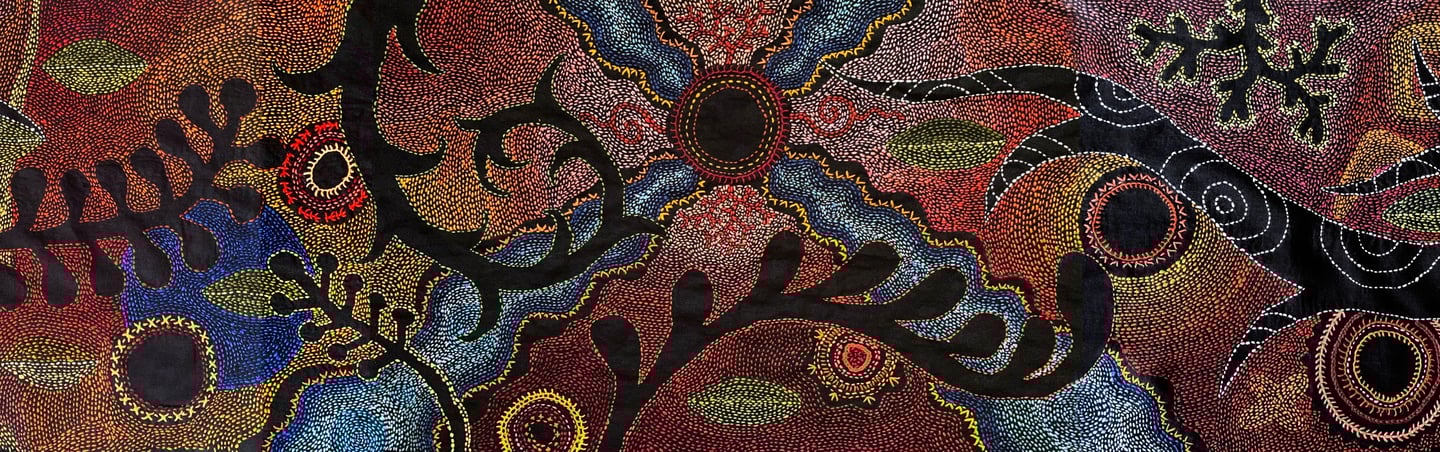
Hand stitching allows me to slow down and engage deeply with cloth, thought, and the natural world. As I explore the interplay of mark-making, texture, and symbolism, I work improvisationally, letting each piece emerge at its own pace. I begin with a theme or emotional prompt and select a corresponding palette of embroidery floss. From there, the design evolves incrementally: each element is chalked onto the linen, then stitched, before the next mark is imagined and added. This continual cycle of decision-making and adjustment keeps the work both contemplative and creatively alive.
QUESTION 1. When you layer hand-dyed fabrics with free-motion embroidery, how does the interplay between color depth and delicate linework help you express ideas that a flat painted surface never could?
ANSWER 1. When I layer painted and hand-dyed fabrics with free-motion quilting, I’m able to build depth in a way that paint on a single plane simply can’t touch. Hand-dyeing creates subtle shifts, saturations, and irregularities—those organic gradients of color that feel alive, like something created by human hand rather than manufactured. When I stitch into that painted surface, the thread becomes both mark and structure. It lifts the line off the cloth, casting real shadows, catching light, and creating a tactile presence that painting alone can only imply.
The interplay of saturated color and fine stitched line allows me to move between painterly softness and precise drawing, between atmosphere and detail. The quilted surface becomes dimensional, responsive, and physical; it holds memory, gesture, and time. Instead of depicting texture, I’m building it. Instead of mimicking depth, I’m making actual topography. That shift—from illusion to embodiment—is what allows the work to communicate in a quieter, more resonant way than a flat painted surface ever could.
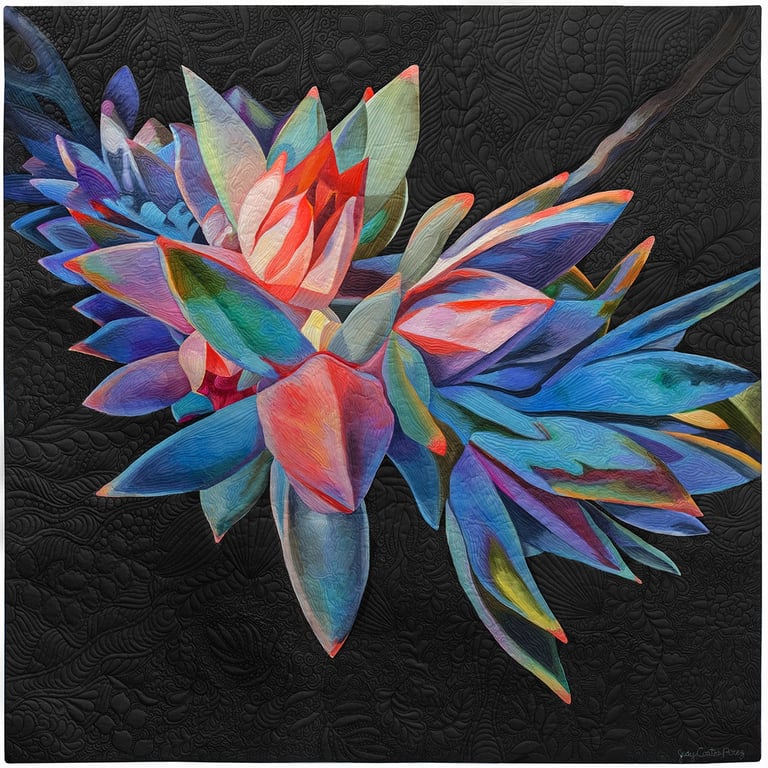
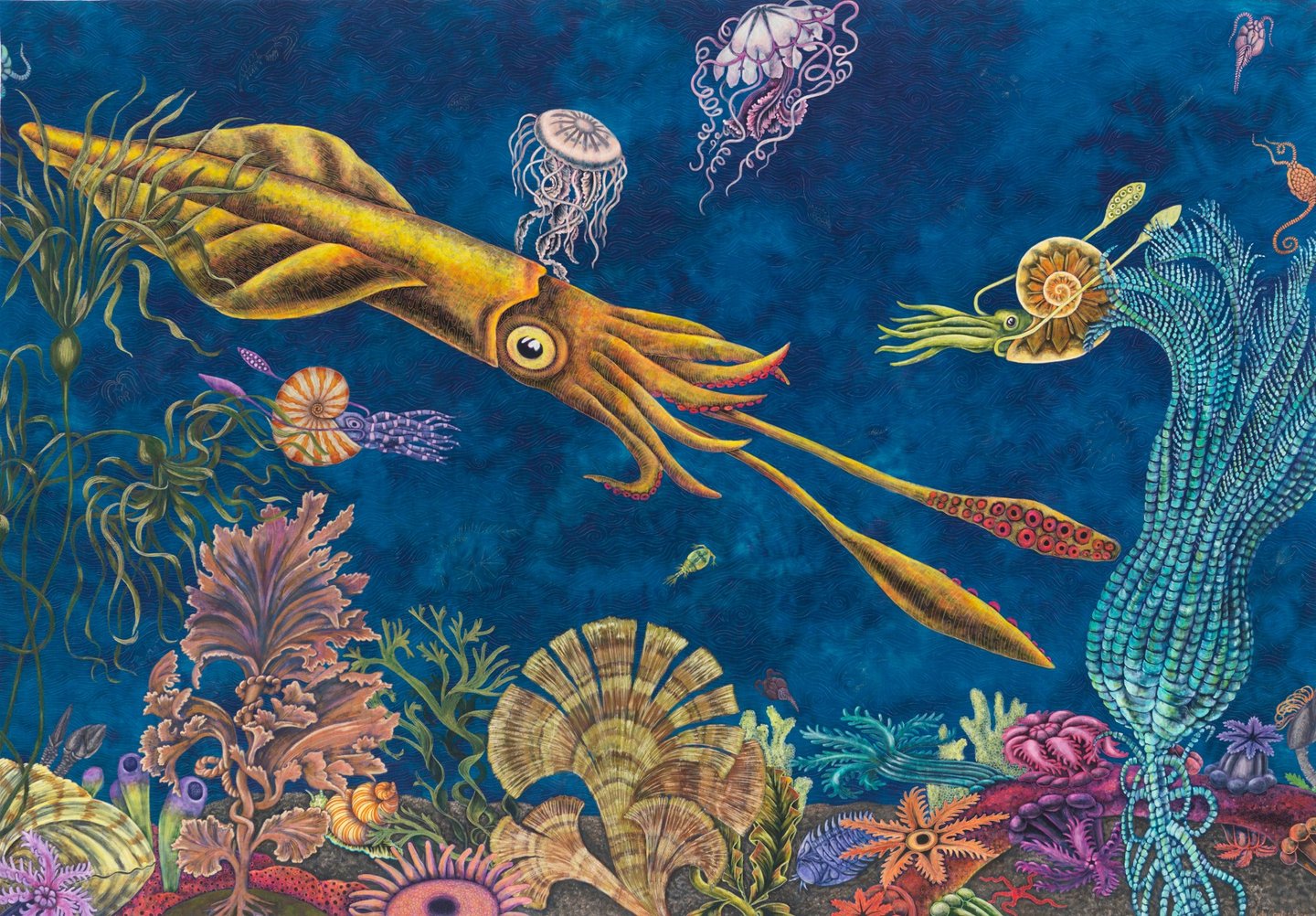
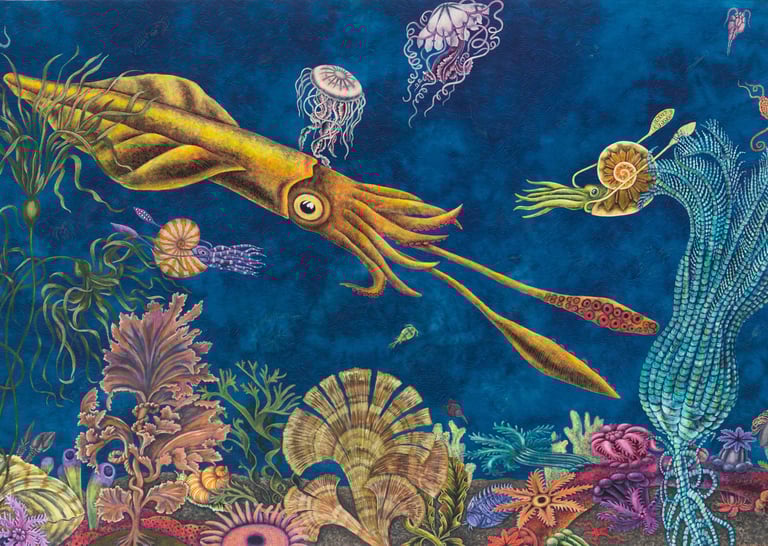
Primordial Sea 90” x 60” hand dyed and painted whole cloth silk charmeuse quilt
Climate Change 74” x 19.5” hand stitched black linen with embroidery floss
Polychromatic Predilection 40” x 40” Painted whole cloth quilt
All copyright and reproduction rights are reserved by Judy Coates Perez..
Artwork may not be reproduced in any form without the artist's express written permission.
CLICK IMAGE FOR FULL VIEW
CLICK IMAGE FOR FULL VIEW
CLICK IMAGE FOR FULL VIEW
All images and written materials on this website are protected intellectual property. All copyright and reproduction rights are reserved by KC Magrath.
Artwork may not be reproduced in any form without the artist's express written permission.
Any use of this content to train, develop, or operate generative artificial intelligence or machine-learning systems-whether commercial or non-commercial—is expressly prohibited without prior written permission.
Photos by KC Magrath are reduced in resolution and watermarked. Purchased images will be at the resolution listed in the store and without watermarks.
Purchased digital downloads are intended solely for personal use at the prices listed.
For commercial use or inquiries about designating a photo as a Limited Edition, please email.
Licensing Agreement.
Privacy Policy
Cookies Policy
Giveaway1 & Terms