Three by Three: Guest Artists in Focus
QUESTION 2. Heat, corrosive baths, tearing, and layering each produce wildly different effects in the emulsion. Which manipulation method has surprised you the most in its results, and how did that discovery influence your ongoing experimentation?
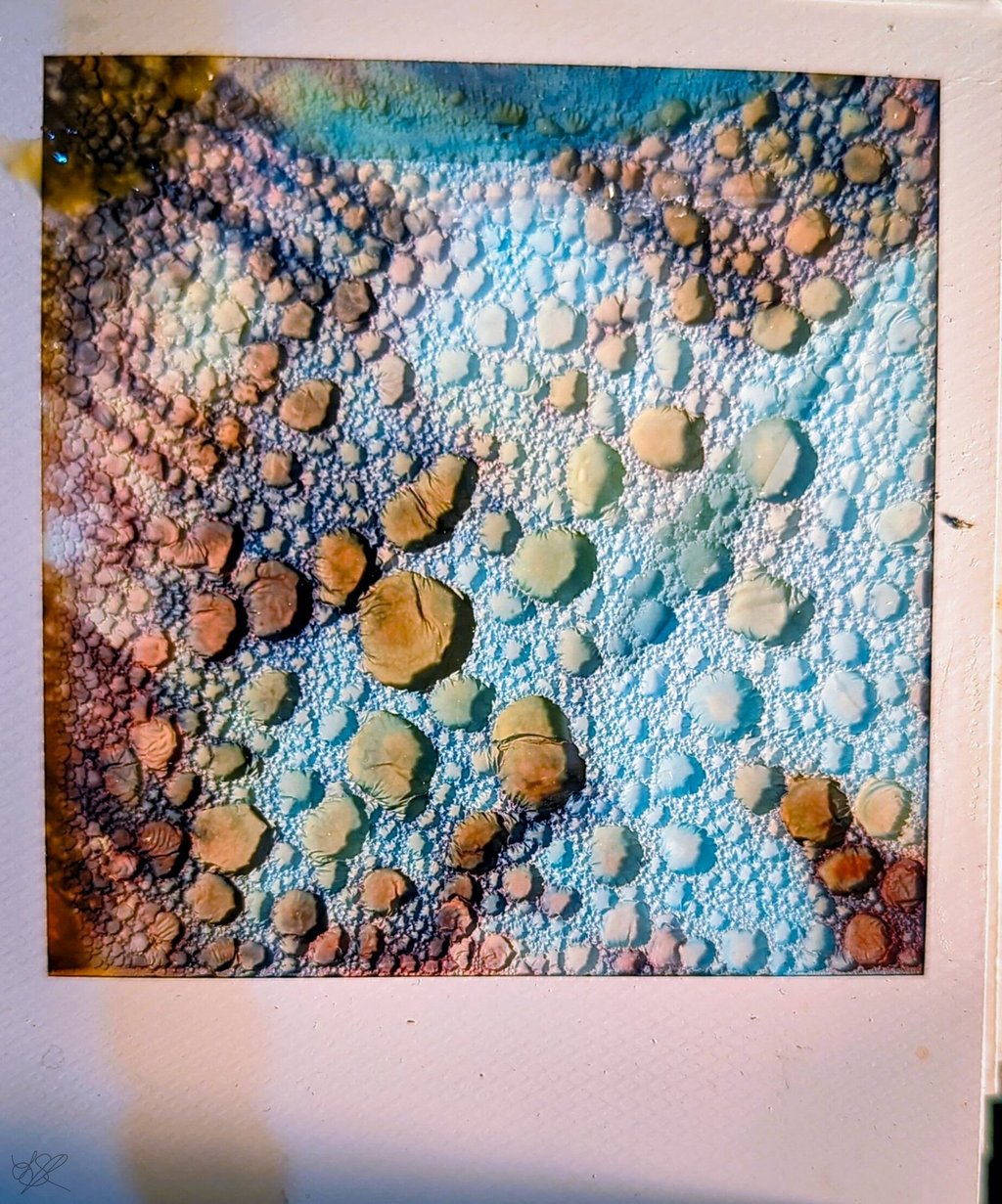
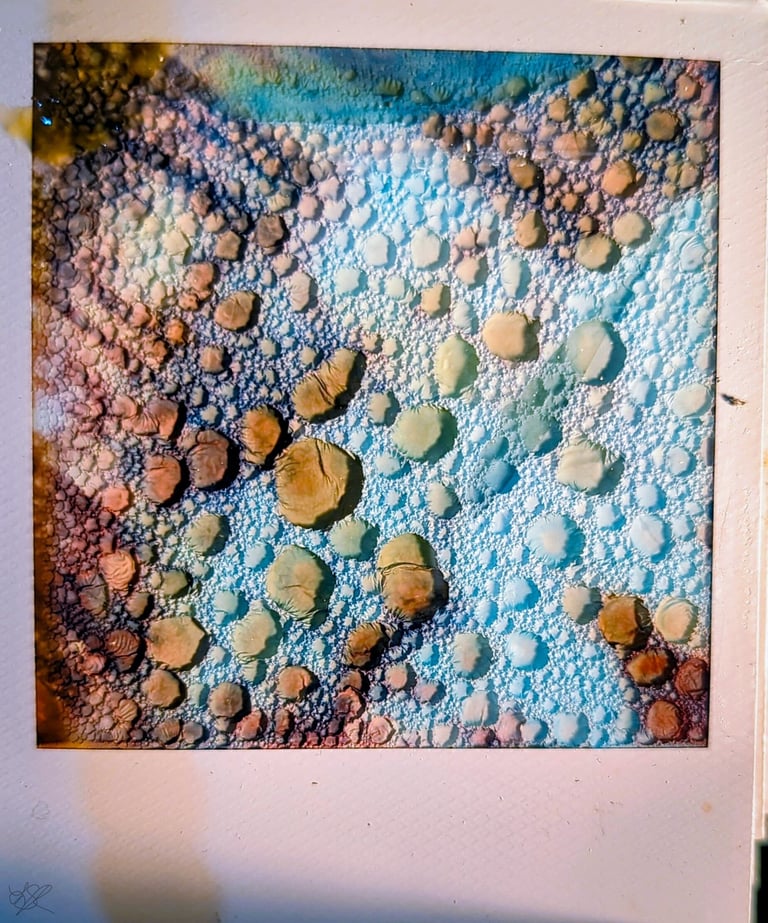
ANSWER 2. When I first started to seek out ways to reuse these aesthetically unpresentable images, there wasn't much information available other than on traditional Polaroid Decay. Polaroid traditional decay typically can take a long period of time and it includes soaking Polaroids, generally in water. I developed my technique using chemistry to create Polaroid Decay sometimes in a matter of minutes. Hence I coined the name Polaroid Rapid Decay.
I initially played with the traditional technique and I still do. My initial Focus was on Fuji Instax, and it was actually a few months later that I had I bought my first Polaroid camera. I took what available information was there and just started to experiment more and more.
What most surprised me, I think is the difference between the two types of film. They look like they're constructed the same but chemically they're very different. Polaroid almost has an organic and bilogical quality to it, where the emulsion is very skin-like. Fuji instax are wildly different in their chemical makeup. What was most surprising was how I can treat a Polaroid and a Fuji Instax exactly the same and get two wildly different results because the chemistry of the instant film is so different from each other. With Polaroid, I'm bound to get more textural changes along with possible color changes, while with Fuji, I don't get textual changes but I'm bound to get some magnificent color changes. They both serve a purpose artistically for me in terms of conceptualizing and conveying my philosophy and my journey.


Lola Scanlan-Rose
Experimental, Photography-Based Artist
MEDIUM: Polaroid, Fuji Instax, 35mm, 120mm film
BIO: I'm Lola Scanlan-Rose, I am an experimental, photography-based artist from Sullivan and Orange County, New York. I work primarily with Polaroid and Fuji Instax instant film. My practice lingers in the liminal — those in-between states where images shift, melt, fracture, and reform. Embracing Kintsugi and Wabi-Sabi, I lean into imperfection; believing there is beauty in the breakdown and that becoming is more sacred than what was or what will be.
Through altered Polaroids, Instax manipulations, and traditional photographic work, I create abstract, emotionally charged pieces rooted in flow, fracture, and the alchemy of presence. My work insists that the moment, raw, unguarded, and unrepeatable—is the real artwork.
WEBSITE: TheInstantWitch13
QUESTION 3. The small scale of Polaroid and Instax prints creates an intimate viewing experience. How do you think this physical closeness affects the way people connect with the surreal, altered worlds you create?
ANSWER 3. The small scale of Polaroid and Instax images pull people in close, and that intimacy is part of why my work lands the way it does. When someone has to lean in, they’re not just viewing the image—they’re crossing the threshold into my world and mind which is often surreal and a bit esoteric. Often the images seem to depict altered worlds- even dimensions that I build inside the frames. Their distortions and fractures reveal depth and layers that conceptually reflect our "being" and construction or reconstruction, as we journey through life. That closeness creates a more personal connection with the frame but also with themselves .
Reflecting conceptually, allows people to feel the quiet truth I work with: even the smallest, most broken things can hold entire universes of possibility and potential for growth and beauty. Being forced to come closer allows the viewer to be drawn into layers and scars- and thereby observe the beauty they construct.
People are often curious what the baseline image was, and philosophically I try to explain that what once was doesn't matter. It is in the now-it is in the becoming something new that is important. The metamorphosis from what was considered unacceptable, even trash is built on layers of scars and brokenness and yet something truly beautiful and new is left behind with hardly a hint of the ugly that was there before, and that's what I want people to focus on.
QUESTION 1. Instant film is often treated as disposable or purely nostalgic, yet you elevate it into something alchemical and poetic. What initially compelled you to reclaim this medium as a site for deeper artistic transformation?
ANSWER 1. I Spent 17 years in an abusive marriage, and when my daughter and I finally left in 2023, art became the way I steadied myself and slowly rebuilt my life. I spent a lot of time alone thinking and taking pictures. Initially, I had started with digital photography and moved to very surreal and heavy editing styles.I wanted to convey the unusual way that I perceive my surroundings, conceptually and literally. Over time, however, digital photography began to lose its luster for me and I felt compelled to physically touch my artwork. I began to experiment with Fuji instax mini film and moved onto Polaroid film shortly after that. I got the same instant gratification shooting Polaroid and intax film that I did from digital but unfortunately I was collecting a stack of damaged, “unusable” images that, economically, I couldn’t just throw away. Instant film is a bit pricey and I needed a way to repurpose these images. That need to recycle and reuse the images began the start of my work and led to the development of my technique of Polaroid Rapid Decay.
As I worked with those ruined frames, I started reflecting on my own journey thus far and the parallels between how something broken can still carry meaning, how there’s "beauty in the breakdown", and how destructive forces can, in fact ,create their own kind of rebirth.
I remember crying in my work shed as I worked on my first couple pieces when I saw the parallel in front of me. I couldn't help but reflect on how I had been so broken and felt so ugly in my life but it was evolving into something wholly new and beautiful. Seeing this being reflected in my artwork in a real tangible way was very eye-opening and moving for me. I realized I was able to convey my evolution-my work was reflecting my journey from an apparently unpresentable life to a life that I'm very proud of at this stage . My work draws from the philosophy Wabi Sabi and the art form of Kintsugi. I explore the quiet strength that comes from being shattered and choosing to rise anyway- changed and more beautiful than when we began. I saw that this wasn't just reflective of my life, but many people's lives and experiences. I didn't just cry for myself but for everyone who's ever felt broken and unpresentable- realizing that my work was symbolic of that journey.
The journey for me personally, includes exploration of my mental health, my spiritual health and my perceptions. I don't just break down images, though. I also sometimes conceptualize something I want to emote in my work using camera techniques like long exposures and multiple exposures. I include one such image, a self-portrait in red, where in fact my form presents as a mist. At this time I was feeling very exhausted, emotionally and physically and I was able to convey that using a long exposure on my Polaroid sx70. Polaroid in particular, but also Fuji Instax, allows me a lot of artistic flexibility and is very pliable, literally and and conceptually.
I feel like sharing my story, my journey, and my artwork, may influence someone who's feeling broken and ugly to look beyond that and see the beauty in becoming healed. Not that our scars never go away but they can become part of our beauty and a record of our successes and not our failures.
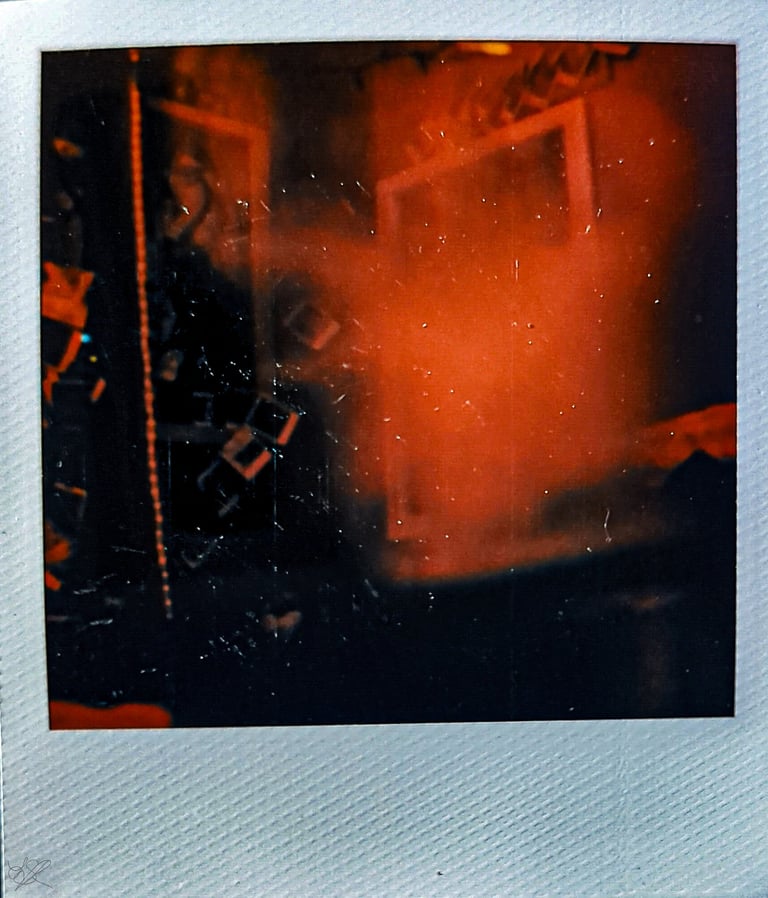
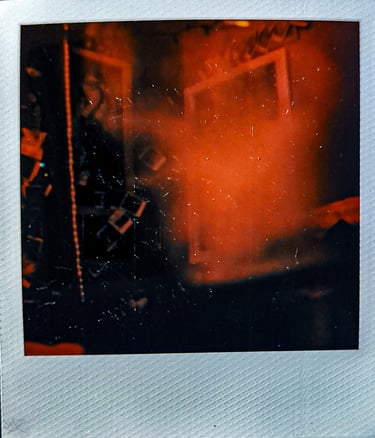
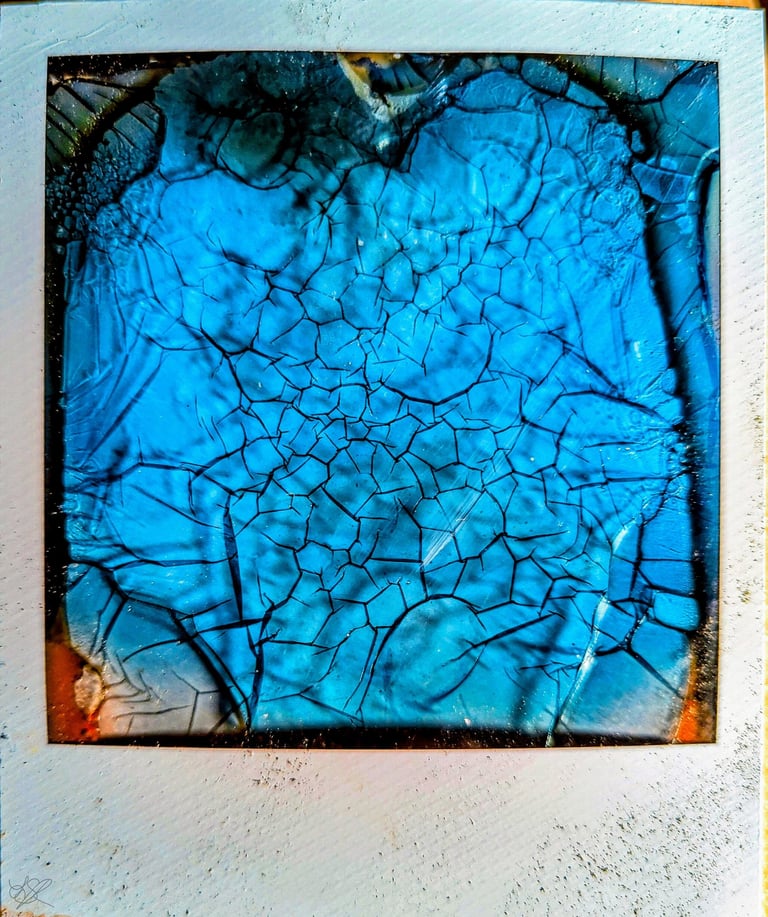
Spread Too Thin: Self Portrait in Red, 2025
chemically altered Polaroid, 3.5in x 4.25in
All copyright and reproduction rights are reserved by Lola Scanlan-Rose.
Artwork may not be reproduced in any form without the artist's express written permission.
CLICK IMAGE FOR FULL VIEW
CLICK IMAGE FOR FULL VIEW
CLICK IMAGE FOR FULL VIEW
Soul Brother: a portrait of Andrew, 2025
chemically altered Polaroid, 3.5inx4.25in
Breath of blue, 2025
chemically altered Polaroid 3.5in x4.25in
All images and written materials on this website are protected intellectual property. All copyright and reproduction rights are reserved by KC Magrath.
Artwork may not be reproduced in any form without the artist's express written permission.
Any use of this content to train, develop, or operate generative artificial intelligence or machine-learning systems-whether commercial or non-commercial—is expressly prohibited without prior written permission.
Photos by KC Magrath are reduced in resolution and watermarked. Purchased images will be at the resolution listed in the store and without watermarks.
Purchased digital downloads are intended solely for personal use at the prices listed.
For commercial use or inquiries about designating a photo as a Limited Edition, please email.
Licensing Agreement.
Privacy Policy
Cookies Policy
Giveaway1 & Terms