Three by Three: Guest Artists in Focus
QUESTION 2. Many of your pieces transform personal memory and unresolved trauma into tactile form. What does the moment of “release” feel like when an internal experience finally becomes cloth?
ANSWER 2. There isn’t really a specific moment like that. Just as working through a theme is a long process, letting it go afterward is a process too. Yes, the feelings eventually dull, but it’s more about the fact that once I’ve gone through all of it, I can look at it with different eyes — I become a little detached from it. In a way, it’s quite a nice form of therapy. When I wrap myself in the finished textile, the weight of the story inside it suddenly becomes more bearable.
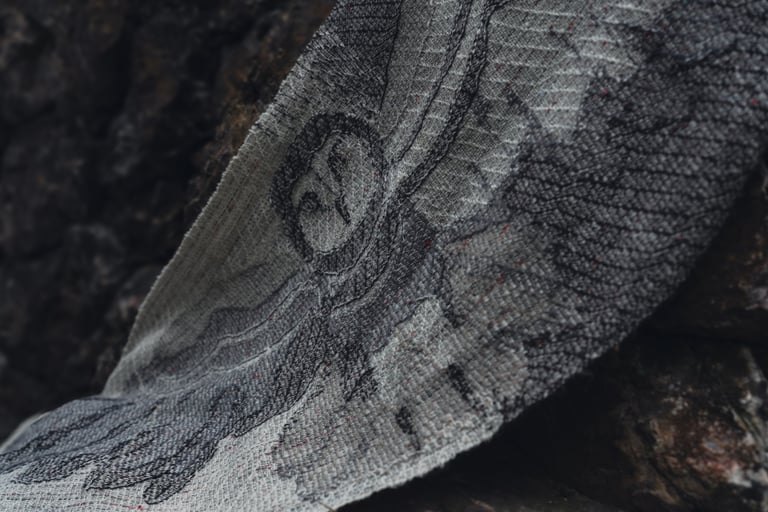
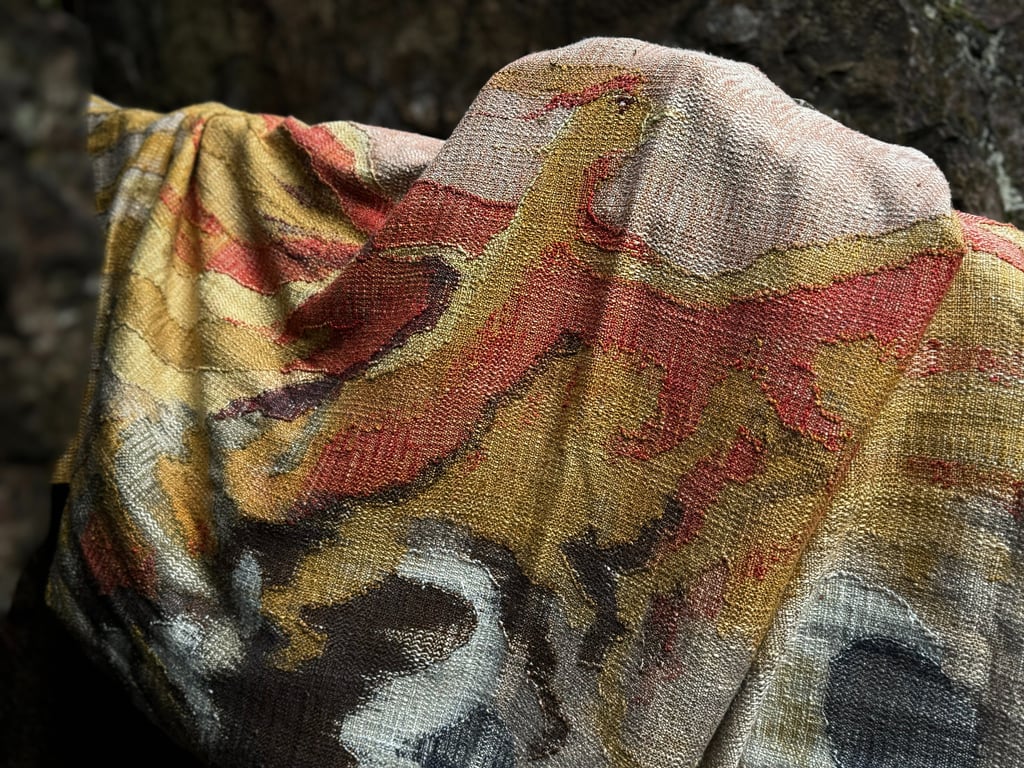
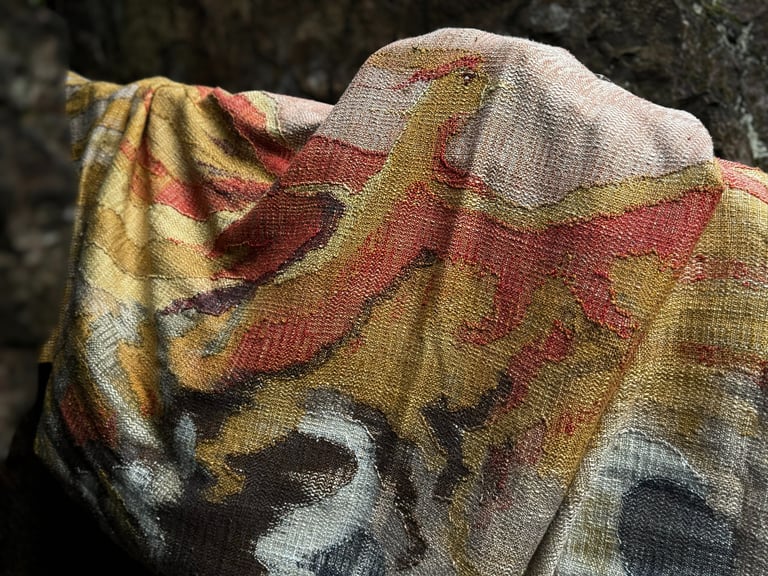
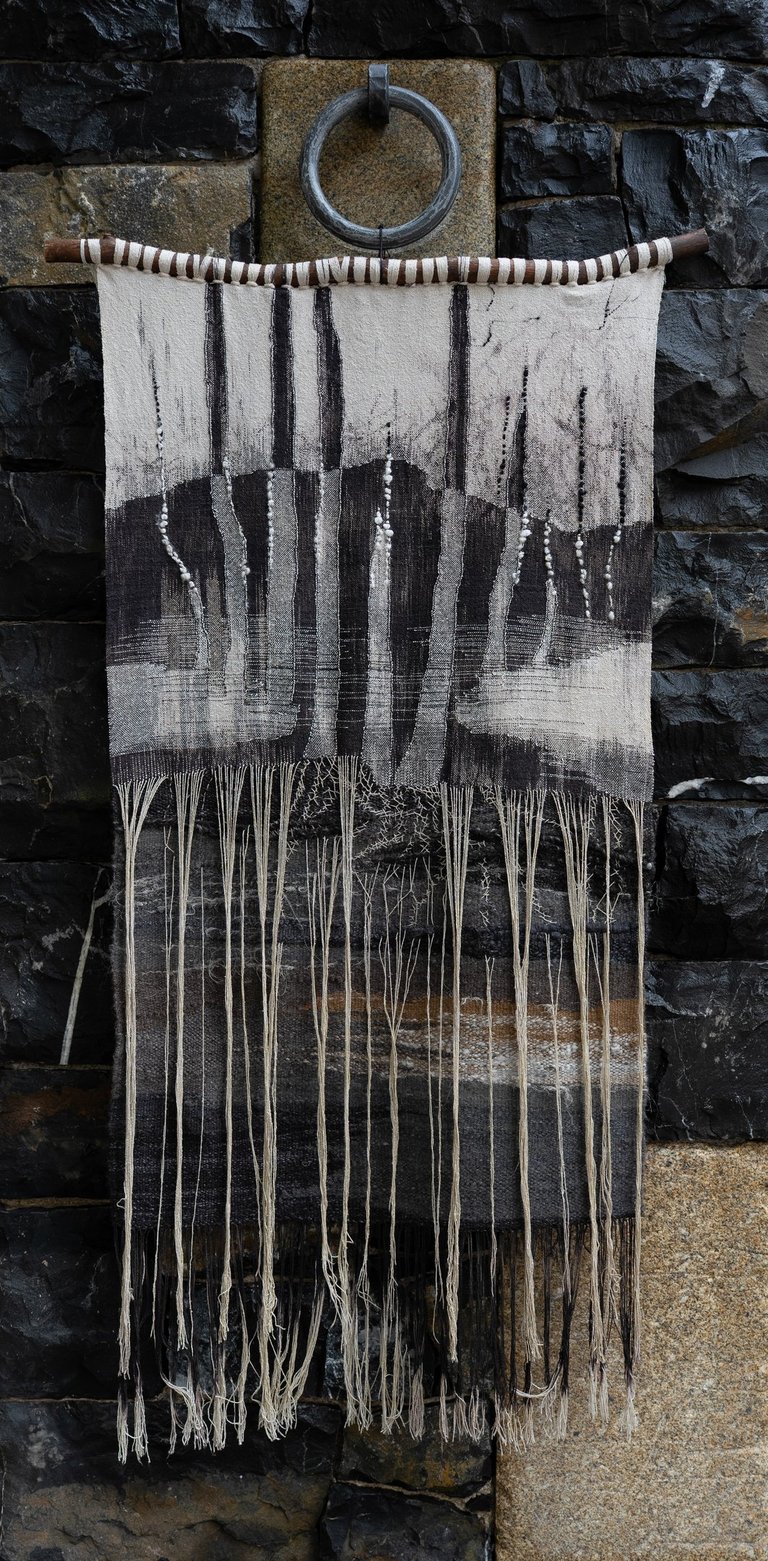
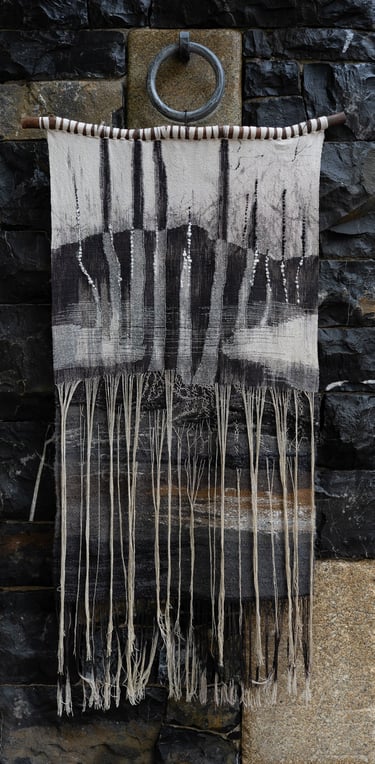
I practically hate every textile at the moment I take it off the loom. Instantly. But the weaving itself isn’t the end — I still have to secure the loose threads, wash the cloth, finish it properly, and in my case (because I really enjoy photography) also photograph it. That’s more hours of work, and it gives me time to fall in love with the textile again. And that part is pleasant. In those moments, I feel slightly more complete.
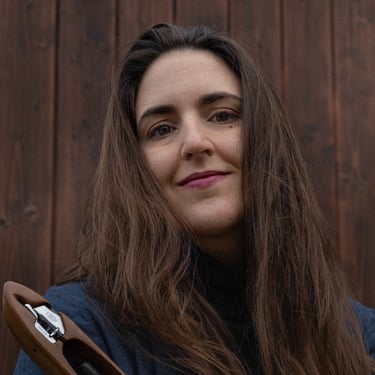
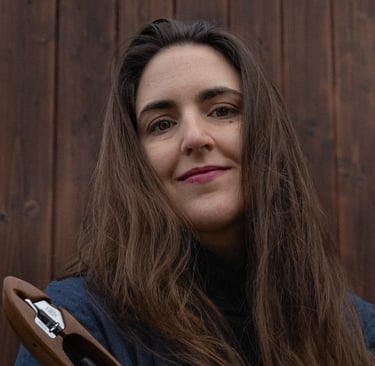
Hana Hančlová
Fiber Artist
MEDIUM: weaving and natural dyeing
BIO: I’m a self-taught weaver, based in the Czech Republic. My weaving is slow; the fabrics are raw. I’m a lover of simple structures like plain weave, yet obsessed with intricate weaving. I’m drawn to linen, nettles and silk, I adore dried flowers and the honey-like scent of natural dyes. In my fabrics, I try to capture fragments of my inner world... emotion by emotion, memory by memory, detail by detail - giving them a physical form. In a way, I turn my traumas into stories I can then let go of.
FACEBOOK: Hatinatkalcovna
QUESTION 3. How does working with natural fibers like silk, linen, nettle, and wool—each with its own temperament—shape the emotional language you’re able to express in a piece?
ANSWER 3. It’s not just about the material itself. A great textile can come from anything — from luxurious silk to synthetically produced yarns. For me, the choice of materials — whether yarn or dyes — is an absolutely crucial part of the entire process. Often, it’s the yarn’s character that sparks the moment I’ve been waiting for to begin a new piece. It is the moment when a new yarn reaches me, I smell it, touch it, and that single contact merges with a thought of a textile resting in my mind. If I feel that kind of connection even with a viscose yarn it might work. But that hasn’t happened for a few years. Working with natural fibers used to be a conscious choice. Today, being in this position feels so right and natural that I no longer seek out other materials.
Yarn is the only tangible thing you have. Weaving is a dialogue with the yarn. I enjoy casual imperfection. Perfectly smooth, glossy yarn doesn’t speak to me; it’s as if it’s cold inside. I don’t even seek out smooth silk — I am drawn to slubs, variation, texture. Over the years, I’ve learned that if I try to use a material that simply doesn’t belong to a particular story, it won’t work. You just feel it. To me, a textile is good if woven correctly, great if all its parts are in harmony. I wouldn’t call my textiles great, but I do try to get there.
Even if I set aside the emotional side for a moment, each material also takes dye differently - the same dye bath will produce different shades on silk and linen. Materials have distinct tactile qualities and behave differently in certain weaves. If I were to weave two “identical” textiles, changing only the material, I’m convinced they wouldn’t even resemble each other.
QUESTION 1. Your work emerges from an intensely slow, meditative weaving process. How does the passage of time itself become part of the emotional narrative you embed in each textile?
ANSWER 1. I’d say the girl who begins the first row of weft is not the same as the one who finishes the last. When I say my weaving is slow, I mean that sometimes I weave only one centimeter in an hour. Some pieces stay on the loom for up to six months before they are finished - I don’t weave professionally and I often take long breaks.
But it doesn’t start with me sitting at the loom. At first, there is a thought, usually just a feeling. It lingers in my mind until it has settled enough for me to give it real form. Then come months of thinking about how to approach it. I wait for a spark, following my intuition closely. I need to clarify how I want the fabric to feel before I can start figuring out how to weave it - in what form, from what materials, using which techniques…
From the initial thought to the finished textile, it can take years. And over that time, I change - both as a person and as a weaver. It would be strange if that passage of time didn’t leave its mark on the fabric. There are things I wouldn’t be able to weave if I sat at the loom the moment the idea came to me.
The theme of the passage of time is omnipresent in my work. It is woven, in metaphors, into every piece I’ve made in recent years. There are three things I wish to achieve — to weave ash and smoke, to weave light… and to weave the ticking of clocks. So far, I haven’t managed any of them.
Last but not least, every piece of fabric captures a moment frozen in time.
Title 2
Title 3
Title 1
All copyright and reproduction rights are reserved by Hana Hančlová.
Artwork may not be reproduced in any form without the artist's express written permission.
CLICK IMAGE FOR FULL VIEW
CLICK IMAGE FOR FULL VIEW
CLICK IMAGE FOR FULL VIEW
All images and written materials on this website are protected intellectual property. All copyright and reproduction rights are reserved by KC Magrath.
Artwork may not be reproduced in any form without the artist's express written permission.
Any use of this content to train, develop, or operate generative artificial intelligence or machine-learning systems-whether commercial or non-commercial—is expressly prohibited without prior written permission.
Photos by KC Magrath are reduced in resolution and watermarked. Purchased images will be at the resolution listed in the store and without watermarks.
Purchased digital downloads are intended solely for personal use at the prices listed.
For commercial use or inquiries about designating a photo as a Limited Edition, please email.
Licensing Agreement.
Privacy Policy
Cookies Policy
Giveaway1 & Terms