Three by Three: Guest Artists in Focus
QUESTION 2. Many ceramic traditions involve repeating symbols, patterns, or motifs across generations. Is there one recurring mark or shape you use that feels like a personal “visual signature,” even if viewers don’t consciously notice it?
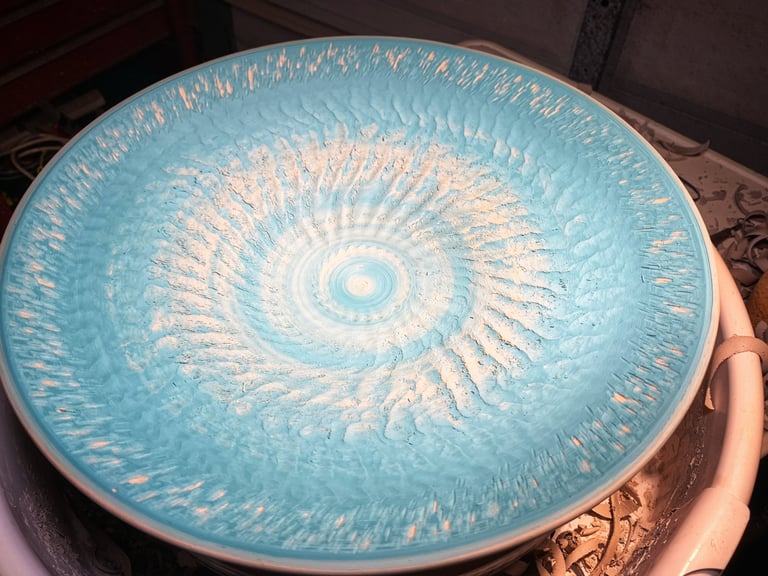
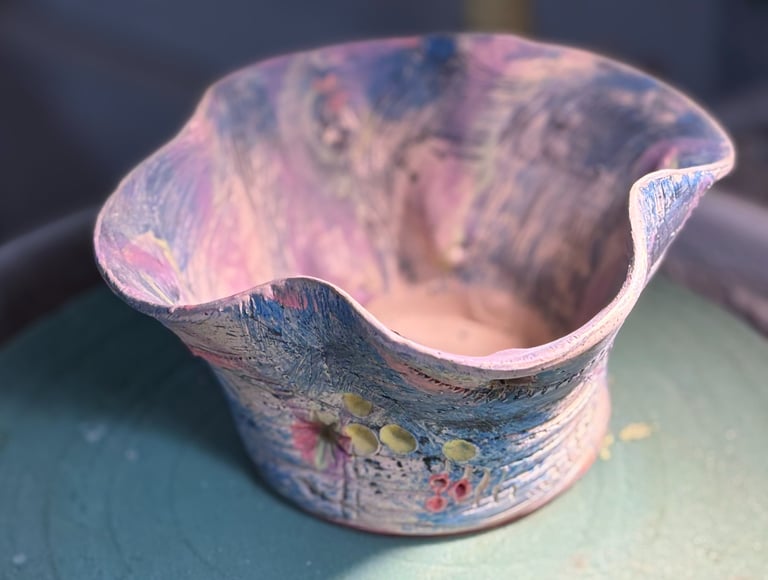
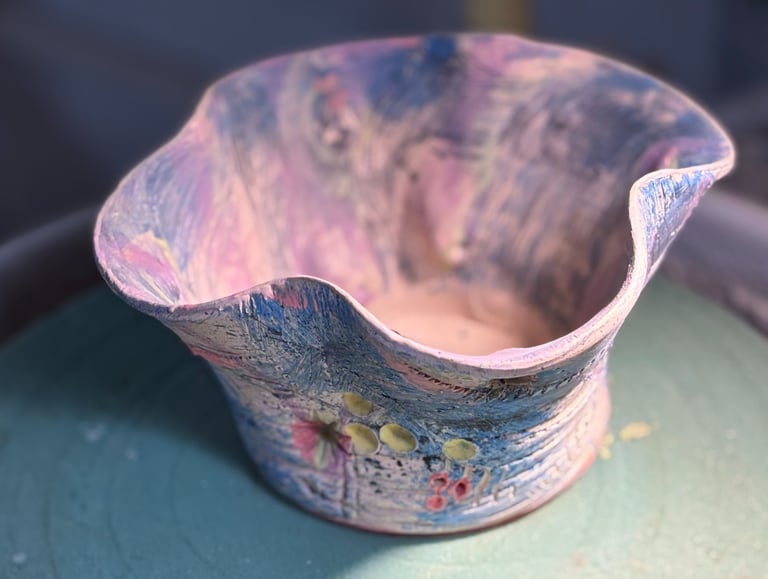
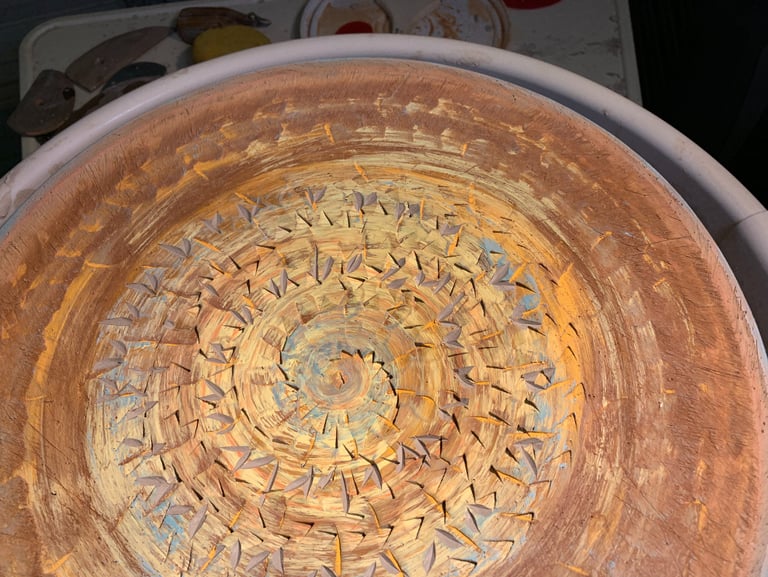
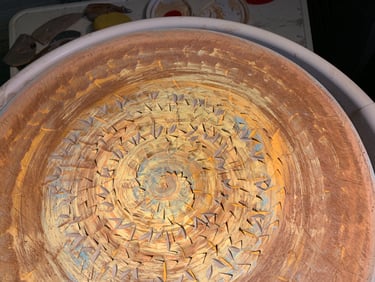
ANSWER 2. Most of my work is generally changed through surface decoration: cutting, carving, piercing, eroding, folding and stretching. It’s present in every piece. After the piece is bisqued, it goes through several color iterations and eventually glaze fired. It takes more time and commitment to the craft. It’s also one of the reasons I have a following at shows.


Hal Raines
Potter
BIO: I am a potter and enjoy porcelain with fine grog. Throwing is my favorite way to grow my pieces. We grow together. They are organic, and I try to be unscripted as I work. Many draw and plan minute details. That’s not the way my work happens. I have Parkinson's and have learned to follow the lead carefully. Most every piece is carved and vividly painted. It’s a wholesome venture into bright-clay play.
Pottery and I found each other at a ceramic show. My spouse and I had been invited to a friend’s show a few times. We were determined to attend the final show of the year, because it was known to be widely attended. While I was there, Craig Easter, the instructor of the class, showed up. His humor struck me immediately. He was Santa Claus-like. I knew that I had to get to know him and have his friendship. His knowledge was expansive. His pranks were directed and endless. Craig’s critiques were appropriate and tempered, and I became a potter because of him and our mutual friend. Best advice to others: Be open to new experiences. Pottery changed my life and gave me hope far beyond Parkinson’s disease. Who knew dirt could be great therapy. Go, play, and have fun.
INSTAGRAM: @HalRainesPottery
QUESTION 3. Working with materials that transform invisibly inside the kiln requires embracing uncertainty. Can you describe a moment when an unexpected kiln result didn’t just work— it redirected your future artistic direction?
ANSWER 3. Many potters final fire differently; there’s pit, raku, oxygen, reduction, wood, and MANY others. Commonly it breaks down to electric or gas kilns. Electric kilns typically allow oxygen in the kiln; that results in iron from clay being pulled to the surface. However, as heat rises, gas kilns shut outside air off; that is reduction firing. A lot of iron is pulled from the clay and the final appearance is darker and more smoky. That tends toward a richer look that is more earthy; that in turn accentuates carved and sgraffitoed places which is always my goal.
QUESTION 1. When you shift from wheel-thrown or hand-built form to intricately glazed surface mapping, what emotional or conceptual territory does glazing allow you to explore that raw clay alone cannot?
ANSWER 1. Embracing a holistic approach gives me the opportunity to follow the clay. I enjoy unfolding the magic of each piece. My work is typically 5 steps. Throw and alter. Apply underglaze and sgraffito. Sometimes it’s better to carve. Chubby pots allow for deeper carving and more complicated procedures. They are sanded as needed and bisqued. After firing, they are stained and glazed. Layering stains and glazes makes them more organic.
All copyright and reproduction rights are reserved by Hal Raines.
Artwork may not be reproduced in any form without the artist's express written permission.
CLICK IMAGE FOR FULL VIEW
CLICK IMAGE FOR FULL VIEW
CLICK IMAGE FOR FULL VIEW
All images and written materials on this website are protected intellectual property. All copyright and reproduction rights are reserved by KC Magrath.
Artwork may not be reproduced in any form without the artist's express written permission.
Any use of this content to train, develop, or operate generative artificial intelligence or machine-learning systems-whether commercial or non-commercial—is expressly prohibited without prior written permission.
Photos by KC Magrath are reduced in resolution and watermarked. Purchased images will be at the resolution listed in the store and without watermarks.
Purchased digital downloads are intended solely for personal use at the prices listed.
For commercial use or inquiries about designating a photo as a Limited Edition, please email.
Licensing Agreement.
Privacy Policy
Cookies Policy
Giveaway1 & Terms