Three by Three: Guest Artists in Focus
QUESTION 2. Your piece Daughter of the Tempest earned recognition for its emotional power—what story or memory first inspired you to shape a storm into glass?
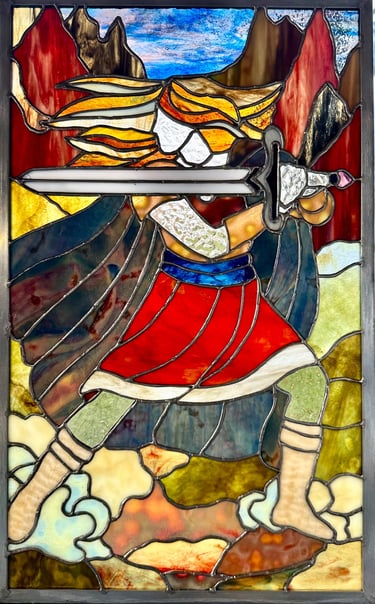
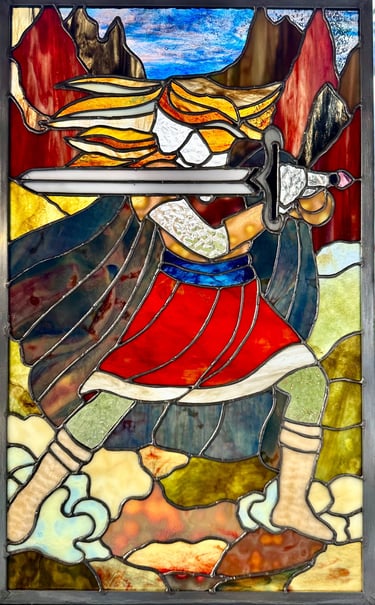
ANSWER 2. “Daughter of the Tempest” placed 3rd in a stained glass competition in Maine this year. The theme of the contest was “Woman—Always the Warrior” and entrants were to interpret that in any way that they felt compelled to do. My 45 year battle with MS has brought out the warrior in me many times over and so the literal creation of a woman in battle was a personal one. At age 74 now, I am still slaying the dragon and have no intention of giving up.
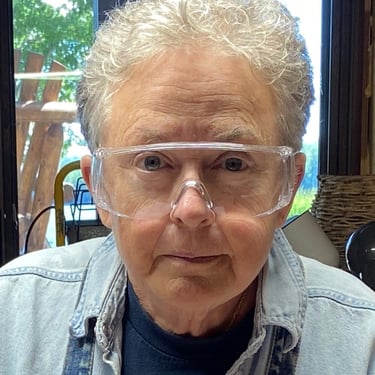
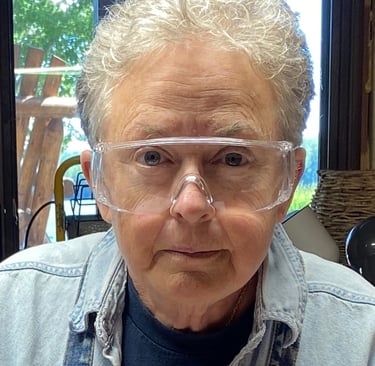
Sue Lawrence-Reeder
Stained Glass Artisan
BIO: My mother passed along the artistic gene in our family and her influence as a fashion illustrator and designer helped shape my love of all things art. My former training was in fine art illustration and watercolor techniques, but I found it a little too limiting since I also loved working with my hands. Finding stained glass pieces fascinating to look at, I decided to learn the skill at a studio in Delaware about 25 years ago and picked up the craft again after moving to Maine in 2014. The creation of glass art combines the artistic skill of design, texture and color selection, with the hands-on crafting I had sought. My work now is primarily by commission and can be seen on line and in a few galleries in Maine.
WEBSITE: MainelyCreatives
QUESTION 1. When you choose stained glass from makers like Wissmach, Kokomo, or Bullseye, what guides you toward the specific textures and opacities that best capture the atmosphere of Maine?
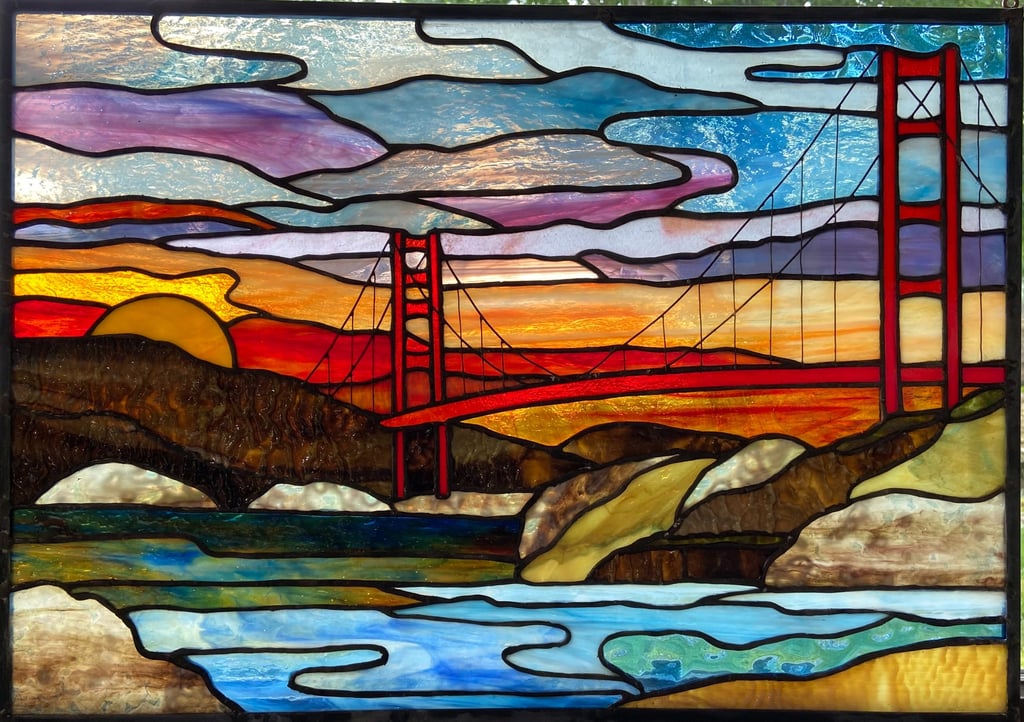
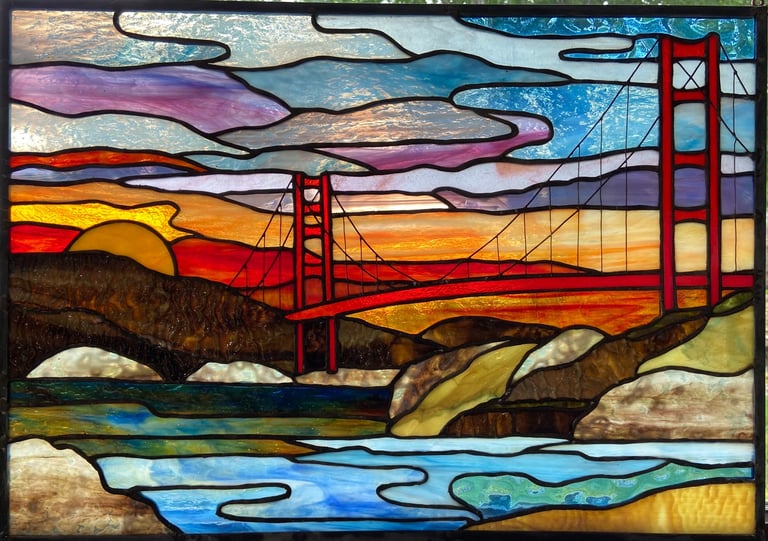
ANSWER 1. Maine is a wonderland for any artist. Surrounded by so much beauty, the richness of bold colors and textures inspire the creation of pieces which I strive to “come alive”. When a work is commissioned, there is a lengthy process of working with a client to discern where the piece will be placed, the size, the amount of light it will receive, how opaque it should or shouldn’t be and the amount of realism desired. Is it to be playful as with “Yosemite Slim” or more realistic in nature as with “The Golden Gate Bridge”? With all this information obtained, the designing of a sketched pattern, glass selection of just the right colors and textures are made and the process begins. I most often create “on the fly” as I see how the glass I’ve selected work with each other and how the textured pieces create just the right effect.
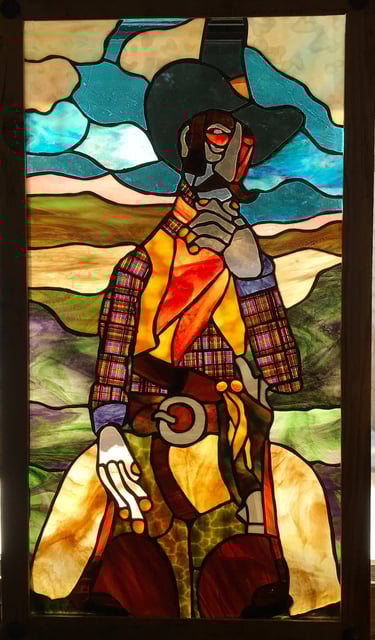
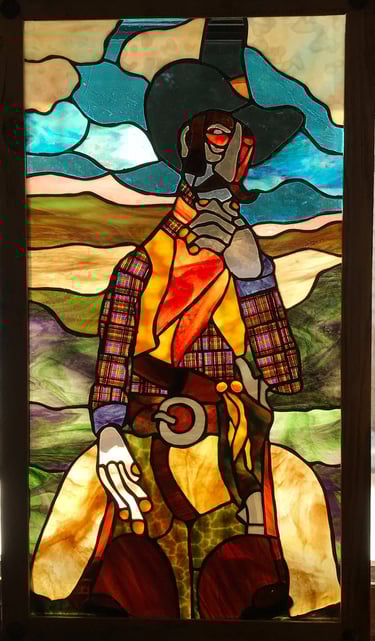
“Yosemite Slim” (Purchased 2021)
All copyright and reproduction rights are reserved by Sue Lawrence-Reeder.
Artwork may not be reproduced in any form without the artist's express written permission.
CLICK IMAGE FOR FULL VIEW
CLICK IMAGE FOR FULL VIEW
CLICK IMAGE FOR FULL VIEW
“Daughter of the Tempest” (Competition Entry 2025)
“Golden Gate Bridge” (Commissioned Work 2022)
QUESTION 3. Glass has its own memory—ripples, bubbles, thickness variations. How do you choose when to let those imperfections speak versus when to seek uniformity?
ANSWER 3. Glass is neither a liquid nor a solid, but rather, a suspension between those two states. It carries its formation history in flaws, ripples, bubbles, and variations in thickness—imperfections much like those found in people. I use these qualities when they add meaning or movement in what I’m try to create and avoid them if perfection and clarity is important.
All images and written materials on this website are protected intellectual property. All copyright and reproduction rights are reserved by KC Magrath.
Artwork may not be reproduced in any form without the artist's express written permission.
Any use of this content to train, develop, or operate generative artificial intelligence or machine-learning systems-whether commercial or non-commercial—is expressly prohibited without prior written permission.
Photos by KC Magrath are reduced in resolution and watermarked. Purchased images will be at the resolution listed in the store and without watermarks.
Purchased digital downloads are intended solely for personal use at the prices listed.
For commercial use or inquiries about designating a photo as a Limited Edition, please email.
Licensing Agreement.
Privacy Policy
Cookies Policy
Giveaway1 & Terms