Three by Three: Guest Artists in Focus
QUESTION 2. When you’re working through an emotionally charged piece, what part of the process tends to carry the most meaning for you — the beginning, the struggle, or the final resolution?
ANSWER 2. The struggle carries the most meaning for me. It’s where uncertainty, doubt, and intuition collide, and where the work begins to reveal something I didn’t consciously plan. That tension forces honesty and presence. The final resolution is important, but it’s shaped by everything that happens in the middle — the moments where the painting resists and asks for deeper attention.
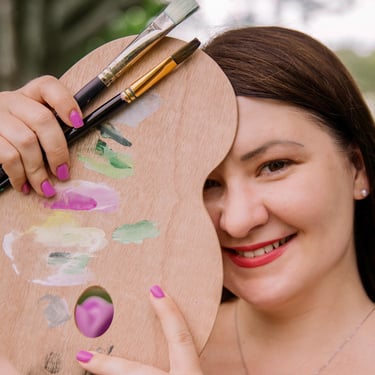
Oleksandra Lisin
Painter, Visual Artist, Art teacher
MEDIUM: oil, acrylic, mixed-media
BIO: Oleksandra Lisin is a visual artist based in South Florida, USA. Her work explores emotional presence, inner strength, and quiet psychological states through figurative and symbolic imagery. Working primarily with oil and acrylic, she is drawn to the tactile, meditative nature of painting by hand and the slow unfolding of meaning within the process. Her practice emphasizes authenticity, human presence, and the emotional trace left by direct physical engagement with materials. Oleksandra works exclusively without AI, valuing the imperfections, pauses, and intuitive decisions that emerge only through lived experience and manual creation.
INSTAGRAM: @Artist_AlexLisin
QUESTION 3. You’ve been explicit about working without AI. Beyond process, what do you feel is emotionally or psychologically at stake when art is made entirely by hand today?
ANSWER 3. When art is made entirely by hand, what’s at stake is presence. Manual creation carries the emotional rhythm of the artist — hesitation, pressure, repetition, and decision — all of which are lost when the human body is removed from the process. For me, working without AI preserves authorship, accountability, and emotional truth. The viewer isn’t just seeing an image, but encountering a trace of lived experience.
QUESTION 1. You’re interested in the tension between softness and strength. How do you translate those opposing qualities into visual choices like brush pressure, edges, or surface texture?
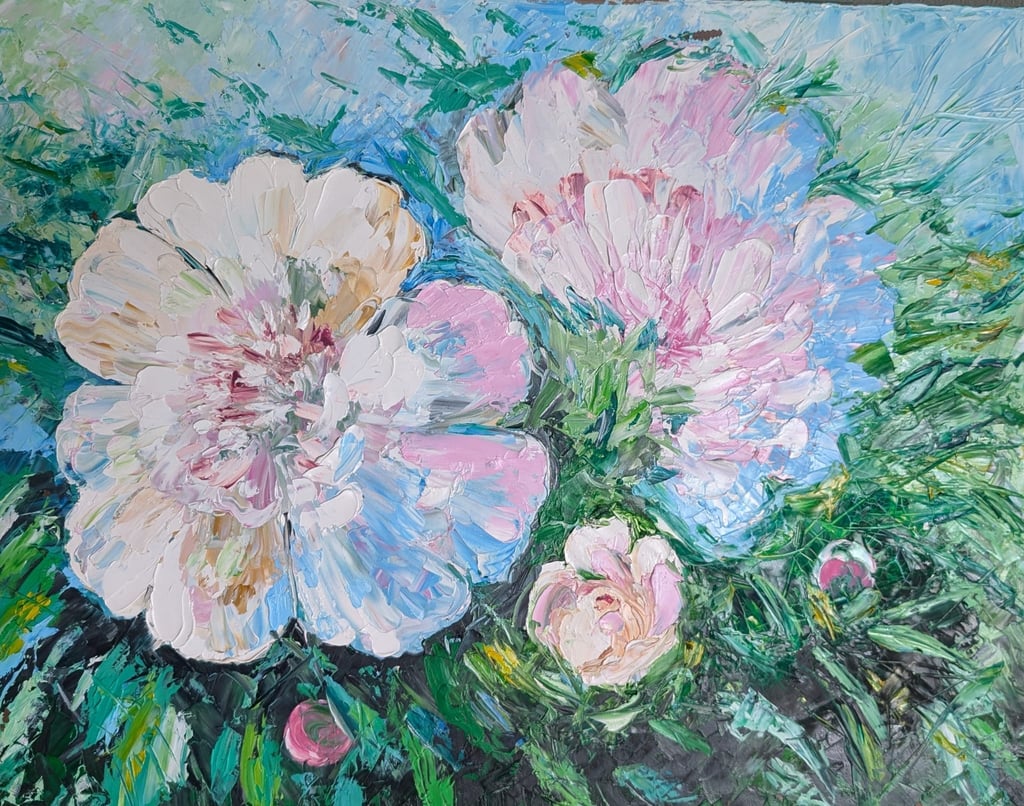
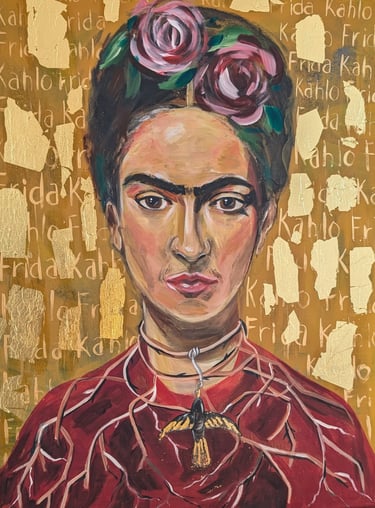
ANSWER 1. Softness and strength often exist simultaneously in my work rather than as opposites. I use variations in brush pressure, layered surfaces, and softened edges to suggest vulnerability, while firmer lines, grounded compositions, and structural balance communicate resilience. Texture becomes a quiet language — sometimes rough and resistant, sometimes smooth and open — allowing both qualities to coexist without one overpowering the other.
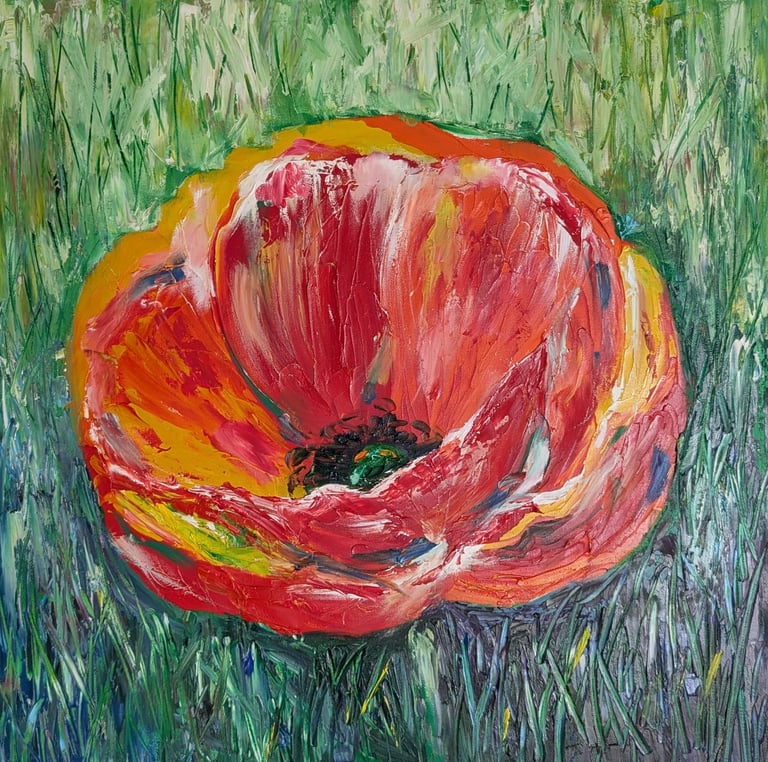
"Red Poppy”, 2024, acrylic on canvas, 16 × 16 in
All copyright and reproduction rights are reserved by Oleksandra Lisin.
Artwork may not be reproduced in any form without the artist's express written permission.
CLICK IMAGE FOR FULL VIEW
CLICK IMAGE FOR FULL VIEW
CLICK IMAGE FOR FULL VIEW
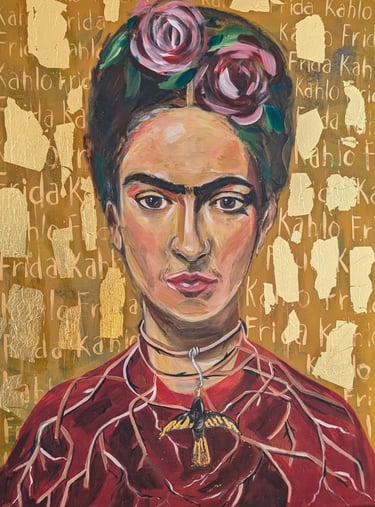
“Inner Icon”, 2023, acrylic & gold leaf on canvas, 20 × 24 in
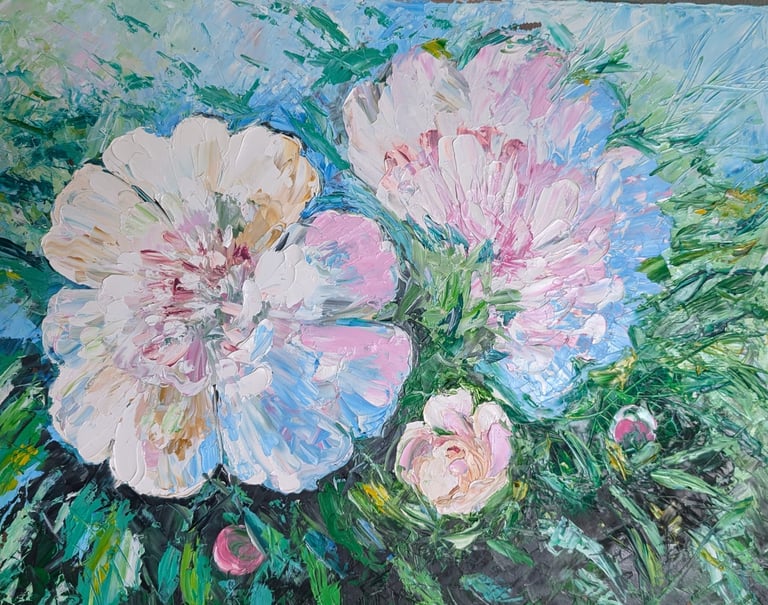
“Quiet Garden”, 2024, oil on canvas, 18 × 24 in
All images and written materials on this website are protected intellectual property. All copyright and reproduction rights are reserved by KC Magrath.
Artwork may not be reproduced in any form without the artist's express written permission.
Any use of this content to train, develop, or operate generative artificial intelligence or machine-learning systems-whether commercial or non-commercial—is expressly prohibited without prior written permission.
Photos by KC Magrath are reduced in resolution and watermarked. Purchased images will be at the resolution listed in the store and without watermarks.
Purchased digital downloads are intended solely for personal use at the prices listed.
For commercial use or inquiries about designating a photo as a Limited Edition, please email.
Licensing Agreement.
Privacy Policy
Cookies Policy
Giveaway1 & Terms