Three by Three: Guest Artists in Focus
QUESTION 2. Wet cyanotypes introduce unexpected color and chaos compared to traditional Prussian blue prints. What draws you toward that unpredictability, and how do you recognize when it enhances rather than overwhelms the image?
ANSWER 2. Traditional cyanotypes are actual “sun prints”. They are created from placing items on pre-treated paper and putting them where UV rays can transform the chemistry into the Prussian blue and white print. I began with these prints (and still do them), but also found myself drawn to wet cyanotypes, which employ a more free-flowing process.
With a wet cyanotype you are introducing other materials into the chemical mix to alter the color and texture of the print. This is done while the paper is still wet as the name implies. You can use a number of different substances to get this effect—ranging from turmeric, to baking soda, to bubbles. Since the prints are placed out while still wet, these materials often move around a bit, mingle together, and create unexpected patterns, vibrant colors, and interesting results!
I find that doing both traditional and wet cyanotype methods are satisfying. With the traditional ones I can get predictable, specific images that capture a moment in time exactly— highlighting botanicals in all their glory. Wet cyanotypes on the other hand allow me to explore a more abstract practice. The images have an element of chance in them that is exciting, and often otherworldly.
While it might seem that wet cyanotypes would be the easier of the two, they actually require far more work. Learning about how certain substances look when exposed, what different color concentrations look like, how the interplay of color and texture affect the overall image, and other considerations takes both time and practice. It’s complicated, and the process doesn’t always cooperate.
I think the key is to understand what various materials will do to the image and then employ them in a way that enhances the focal points rather than obscuring them. There has to be a sense of intentionality in the final image. For me, anything too “blocky” or “blobby” is out. Even in this more experimental process, I do strive for a sense of order. This all takes a lot of trial and error. I’m constantly learning.
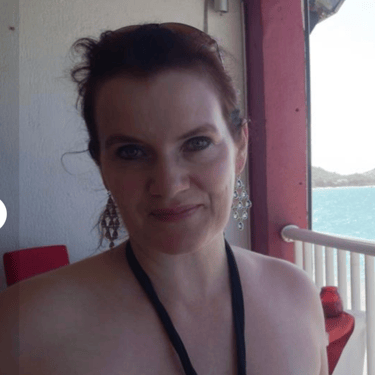
Catherine Tully
Alternative Process Printmaking
MEDIUM: traditional and wet cyanotype
BIO: Catherine Tully is a cyanotype artist from the Chicagoland area whose visual language is deeply shaped by more than five decades in the world of ballet. Her lifelong engagement with shape, balance, and line informs her distinctive approach to botanical cyanotypes and wet cyanotype experimentation.
Tully’s work is grounded in an attentive dialogue with the natural world, using sunlight, water, plant materials, and other substances to explore themes of impermanence, fragility, ephemeral beauty, and ecological interconnection. Her prints are marked by a dancer’s sensitivity to form and structure, paired with a willingness to explore and embrace the unpredictability of organic processes.
INSTAGRAM: @Sunshine.Artwork
QUESTION 3. Your work often reflects impermanence and ecological connection. What do you hope viewers carry with them after encountering a piece—before they even think about technique or process?
ANSWER 3. We are all connected in this world. Plants, animals, people. Being out in nature reminds us of this important truth. With the rise of the web and people spending so much time on their computers/phones, we are losing some of that precious connection. It’s important to be reminded of the cycle of life and our place in it. We are stewards and caretakers of this planet—or at least—we should be.
I’m trying to bring the outside…inside. To help place people back into this mindset if possible. If I can get viewers excited about the natural world even for a moment, I think I have done what I set out to do.
As for impermanence…what I try to capture is a fleeting moment in time…very much like a photograph. Each piece is a snapshot. A reminder to live in the now—because it’s all that we really have. This part of my art making might be more for me, because it's a concept I struggle with practicing in my daily life (I think many of us do).
QUESTION 1. Having spent decades immersed in ballet, how does your understanding of movement and balance influence the way you place botanical forms within a cyanotype composition?
ANSWER 1. Form and line are everything in ballet, and getting it “just right” is an ongoing challenge once you reach an advanced level of study/performance. I was heavily influenced by ballerinas Marjorie and Maria Tallchief, both of whom I studied with when I was a teenager. The emphasis was often on the smallest of details—the position of a finger, a particular angle of the head, the through-line of the arms. Specific things that would bring to life the elongated, streamlined look of the Balanchine-style dancer.
Studying with ballerinas of this caliber is akin to learning from a master painter, or apprenticing with a renowned sculptor - you are learning from someone who has refined their art form to perfection, and they are passing it on to you. I have always considered that an immense gift, but I had no idea that it would also manifest in my pursuit of visual art.
Once you “get” the visual language of form and line into your brain and body at this level, it can be called on in other ways. I found this rigorous training matched perfectly with my botanical art practice. Nature has form, line, movement, and balance—just like ballet!
My background gives me a very strong point of view and perspective when arranging the flowers and plants on paper to expose. I somehow innately know where they should be placed, and am able to edit away unnecessary extras, which (to me) create visual noise instead of harmony and cohesion.
An unexpected extra was the ability to easily understand how I reach what is often called "flow state”. This type of focused absorption in the task at hand (in this case, making cyanotypes) was very easy for me to achieve—because I already knew how to get my mind into gear for creative work. I believe it helped accelerate my practice, and it continues to be a state I can call on without effort, thanks to ballet.
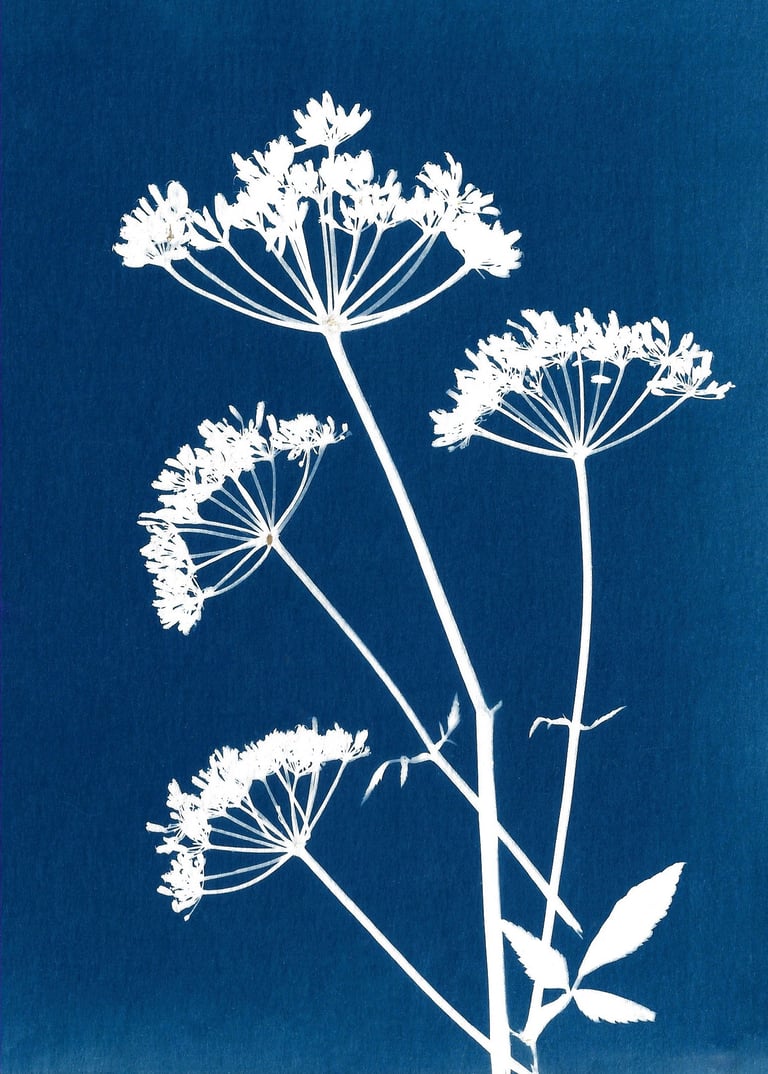
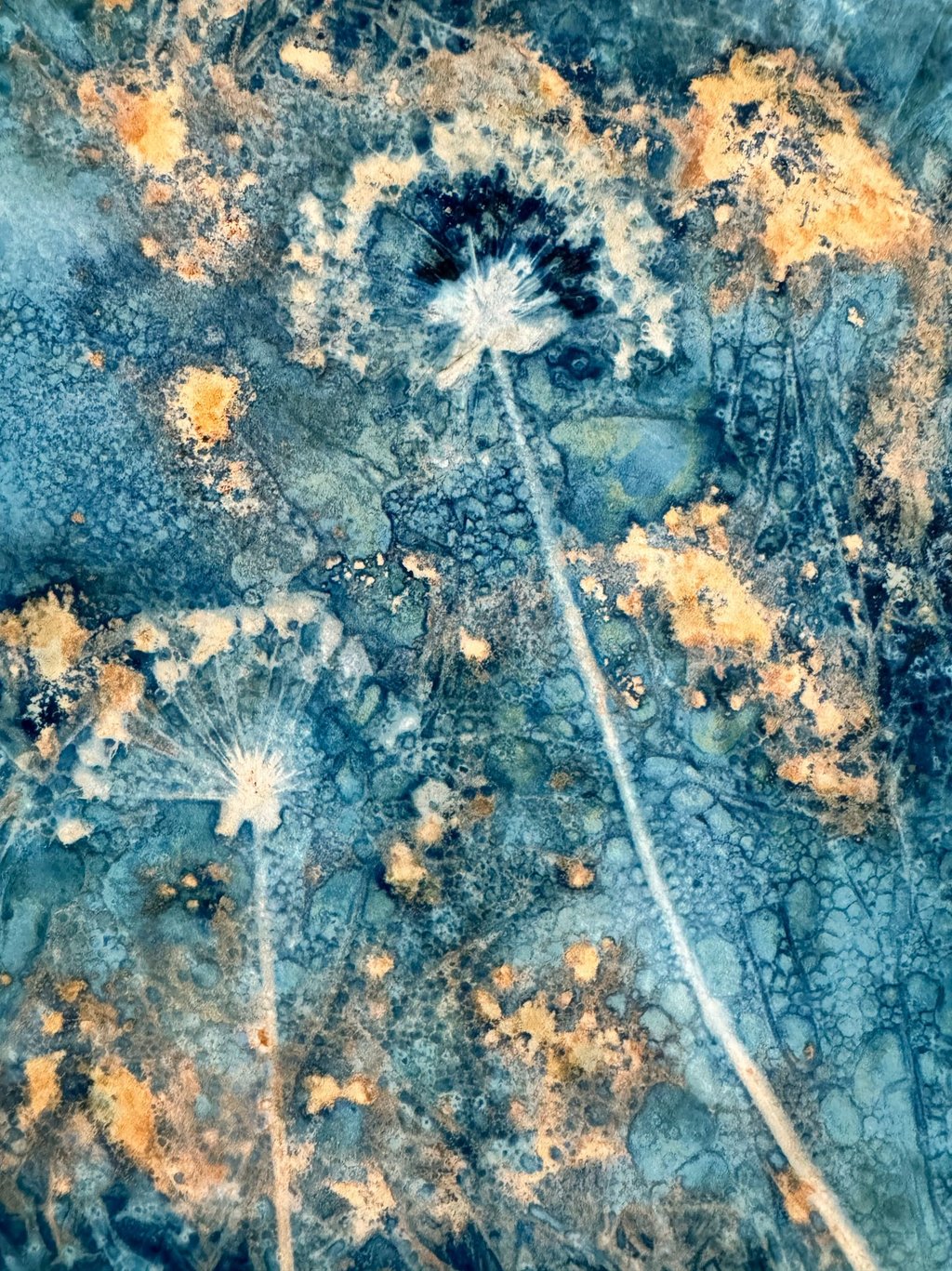
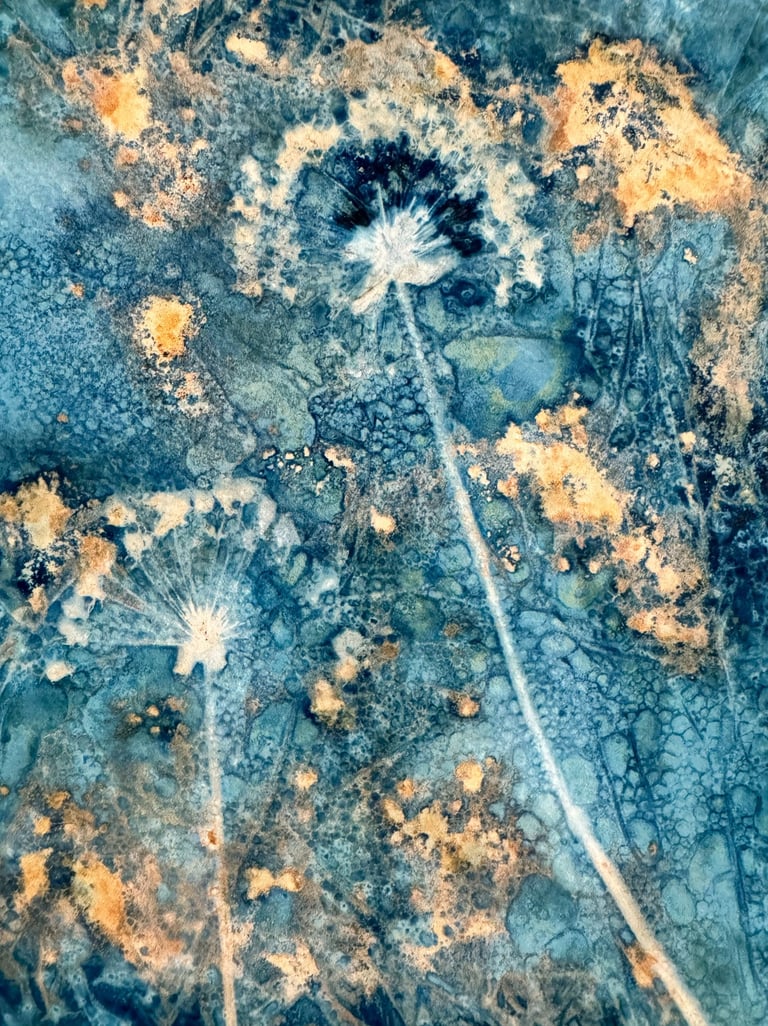
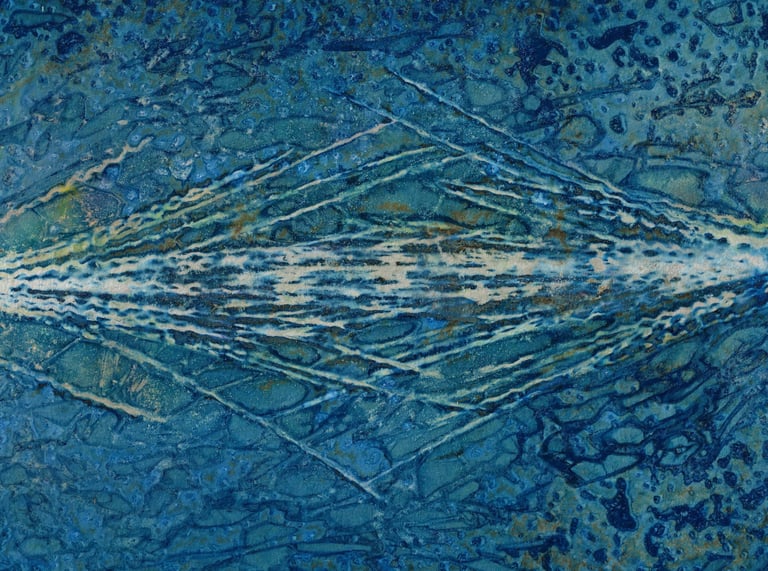
“Neighbor’s Flowers”, 2024, Traditional Cyanotype
All copyright and reproduction rights are reserved by Catherine Tully.
Artwork may not be reproduced in any form without the artist's express written permission.
CLICK IMAGE FOR FULL VIEW
CLICK IMAGE FOR FULL VIEW
CLICK IMAGE FOR FULL VIEW
Untitled, 2025, Wet Cyanotype
Untitled, 2024, Wet Cyanotype
All images and written materials on this website are protected intellectual property. All copyright and reproduction rights are reserved by KC Magrath.
Artwork may not be reproduced in any form without the artist's express written permission.
Any use of this content to train, develop, or operate generative artificial intelligence or machine-learning systems-whether commercial or non-commercial—is expressly prohibited without prior written permission.
Photos by KC Magrath are reduced in resolution and watermarked. Purchased images will be at the resolution listed in the store and without watermarks.
Purchased digital downloads are intended solely for personal use at the prices listed.
For commercial use or inquiries about designating a photo as a Limited Edition, please email.
Licensing Agreement.
Privacy Policy
Cookies Policy
Giveaway1 & Terms