Three by Three: Guest Artists in Focus
QUESTION 2. In series like Domestic Distractions, color and distortion take precedence over recognition. How do you decide how far to push abstraction before the image loses its tension?
ANSWER 2. The way that I think about abstraction in photography differs a bit from the usual definition. I don't think that the object in a photograph is required to be unidentifiable for it to be classified as an abstraction. In painting, every brush stroke is deliberate, and the artist chooses which details to disclose or conceal. There is no reason to paint in details that distract from the artist's purpose. Modern cameras and lenses by contrast are indiscriminate in what they reveal. I think that this is one of the characteristics that makes photography unique among the arts. I believe that elements like line, shape, color, texture and patterns that we associate with abstraction are integral qualities of an object's identity. They are typically ignored in documentary photography in favor of attention to an object's functional identity. But they are real, nonetheless. A photograph can be equally abstract and representational at the same time.
I try to convey that duality in my photography. I may try to bring out the abstract qualities in an object to emphasize both visual personalities. But I never want to destroy the codependent bond in that relationship.
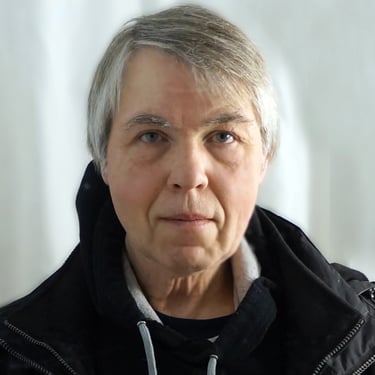
Frank Styburski
Photographer
BIO: Frank Styburski is a photographer whose pictures consider shapes, lines, colors and patterns that occupy space, and are less about the functional identity of objects that inhabit them.
He lives in Chicago, where he worked at commercial labs, and photo supply sources for forty years before assembling a fine art portfolio.
He is a past Board Member of Northwest Arts Connection,- an advocacy group dedicated to presenting art with connections to the community, on Chicago's northwest side.
He established the ongoing program of community centered exhibits that became the Shot of Art series at PERKOLATOR, in the Irving-Austin Business District of Chicago, and served as its original curator.
He shows his work in galleries and nontraditional exhibit spaces, where people gather to work and do business. His work has been on display at the Polish Museum of America, the Illinois State Museum in Lockport, and Harold Washington Library Center.
His photographs are in private collections in the U.S, Canada and the U.K.
He is a frequent contributor to the FRAMES Magazine website and print editions.
WEBSITE: FrankStyburski
QUESTION 3. Exhibiting abstract photography in cafés, libraries, and public spaces places your work in front of unprepared viewers. How do those settings influence how you think about accessibility and surprise?
ANSWER 3. I grew up in a blue-collar neighborhood where folks cared nothing for the arts. Their lives were occupied with the practicalities of paying the rent and feeding the family. An appreciation for art was a luxury that was a distraction from the necessity of making a living. And, in addition, the accepted themes of grand landscapes and portraits of the elegantly dressed rich and famous had little relevance in their lives.
So I understand that my audience at cafes, libraries and other public spaces doesn't necessarily think about or care deeply about art. I try to make images of accessible, ordinary things that can easily connect with a general audience. Once I have their attention, I hope that they see past the surface of the objects in my images and find an appreciation for the aspects that are independent of their functional purpose.
QUESTION 1. Many of your images begin with ordinary household or street objects. What signals to you that something mundane has the potential to become visually transformative through the camera?
ANSWER 1. I look at everything. My life is full of little everyday things. So it seems natural for me to pay attention to the inconsequential items that occupy so much of my time and space. These pictures are from an ongoing series that I call, "Little Things: Domestic Distractions/Abstractions". All of them are of things I found around the house and kept me from completing some repair or housekeeping task.
I always ask myself, "What am I looking at?". Once I get past the easy answer, I ask, "What else do I see?". Often the answer is shapes, lines, patterns, light and shadow. These are the things that excite me. And these are the subjects I want to share in a way that I want to see them.
Eventually my chores get done, and I have some interesting images to share.
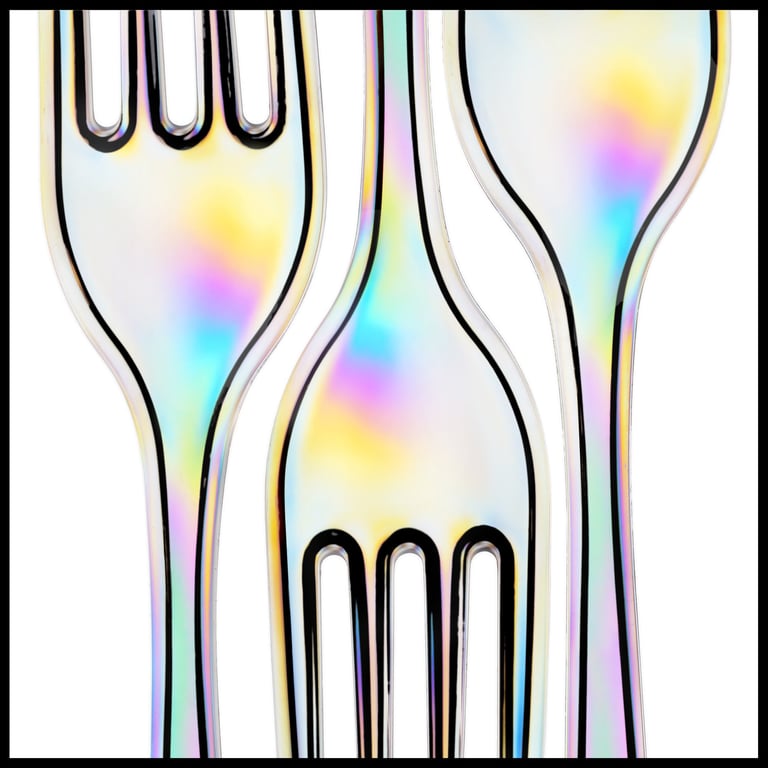
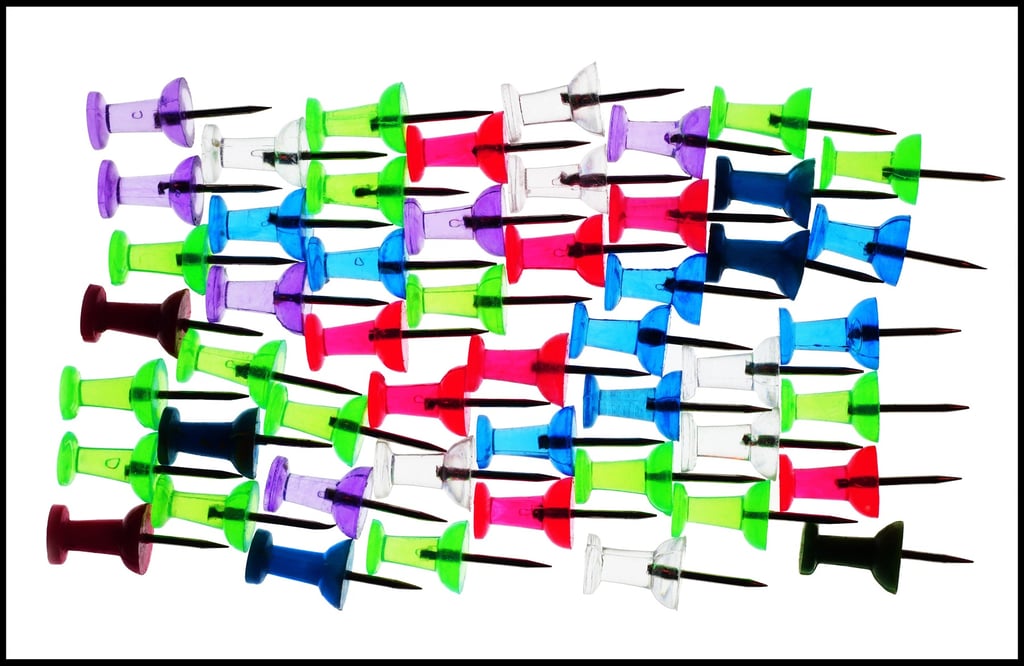
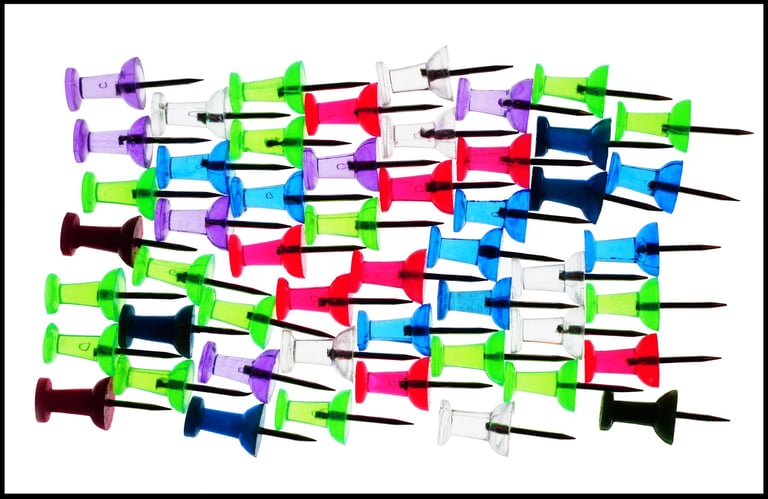
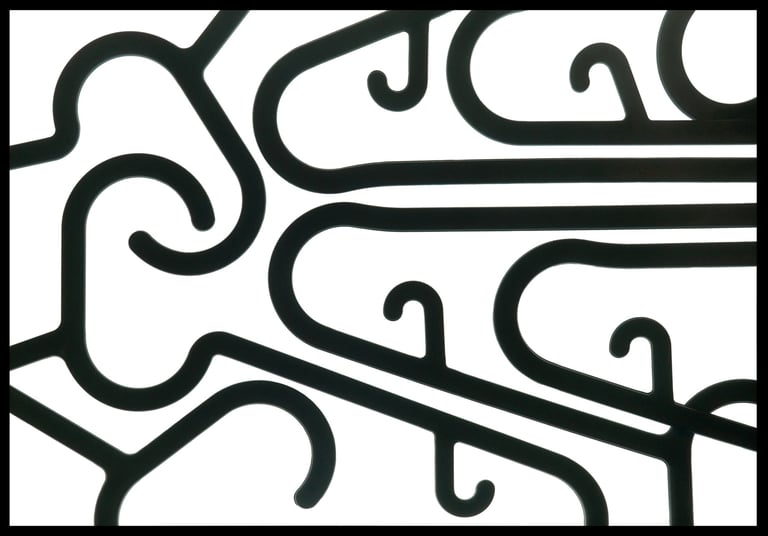
"yEs. nO. MayBE", 2022, Photography with cross-polarized light.
All copyright and reproduction rights are reserved by Frank Styburski.
Artwork may not be reproduced in any form without the artist's express written permission.
CLICK IMAGE FOR FULL VIEW
CLICK IMAGE FOR FULL VIEW
CLICK IMAGE FOR FULL VIEW
"Pointless and Directed #2", 2023, Photography
"Hooks and Loops", 2022, Photography
All images and written materials on this website are protected intellectual property. All copyright and reproduction rights are reserved by KC Magrath.
Artwork may not be reproduced in any form without the artist's express written permission.
Any use of this content to train, develop, or operate generative artificial intelligence or machine-learning systems-whether commercial or non-commercial—is expressly prohibited without prior written permission.
Photos by KC Magrath are reduced in resolution and watermarked. Purchased images will be at the resolution listed in the store and without watermarks.
Purchased digital downloads are intended solely for personal use at the prices listed.
For commercial use or inquiries about designating a photo as a Limited Edition, please email.
Licensing Agreement.
Privacy Policy
Cookies Policy
Giveaway1 & Terms