Three by Three: Guest Artists in Focus
QUESTION 2. You work across haiku, found poetry, inspirational prose, and longer reflections. What signals to you that an idea belongs specifically in haiku form rather than another literary structure?
ANSWER 2. I know instinctively. While any poetry form can be used to create a silent conversation with readers, to me, the haiku offers the most space for thoughts and interpretations. You can read a haiku 50 times and still feel differently every time.
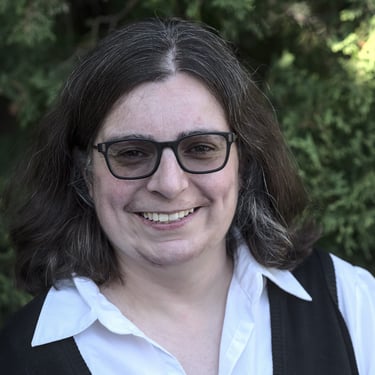
Cendrine Marrouat
Poet, Writer, Author, Photographer, Painter, Magazine Editor
MEDIUM: photography, watercolor
BIO: Hailing from Winnnipeg, Manitoba, Cendrine Marrouat is a poet, writer, photographer, watercolor painter, the co-founder of Auroras & Blossoms and The PoArtMo Magazine, and the founding editor of The Haiku Shack Magazine. She has authored and co-authored 50+ books, and her work has appeared in many publications and anthologies. Cendrine is the creator of several poetry forms, a type of flash fiction, as well as the Reminigram. She believes in the power of human creativity, and, as such, is strongly opposed to any form of AI-generated writing and art.
WEBSITE: CreativeRamblings
QUESTION 3. Your writing frequently centers on everyday moments rather than dramatic events. What draws you to the small, easily overlooked details as vessels for meaning?
ANSWER 3. Dramatic events aren't born out of thin air. They usually happen as a result of an accumulation of smaller events and things.
I find the ordinary so poetic, so illuminating! The light hitting the floor in the evenings, the purring of my cats, the love in my dogs' eyes, the sound of footsteps in snow, the laughter of a child... Even silence is an incredible teacher—if you are willing to listen.
QUESTION 1. Haiku asks for extreme economy of language, yet your work often carries deep emotional resonance. How do you decide what must remain in a poem—and what must be let go—for it to breathe?
ANSWER 1. The Haiku is an intimate form of poetry that goes beyond its syllable count. To write a memorable haiku, you need to understand the importance of conciseness and simple language, and how to leverage the kigo (seasonal reference) to evoke a specific mood. Every word counts!
A haiku does not just freeze a scene in time. It also implicitly reveals the author’s innermost feelings at that precise moment. As such, it tells a story about the human journey.
I believe that writing haiku has more to do with letting go of one's fears than anything else. And when you let go, it becomes easier to experiment with language. In itself, it's akin to a deep spiritual experience.
All copyright and reproduction rights are reserved by Cendrine Marrouat.
Artwork may not be reproduced in any form without the artist's express written permission.
VIDEO - Sound On
VIDEO - Sound On
VIDEO - Sound On


All images and written materials on this website are protected intellectual property. All copyright and reproduction rights are reserved by KC Magrath.
Artwork may not be reproduced in any form without the artist's express written permission.
Any use of this content to train, develop, or operate generative artificial intelligence or machine-learning systems-whether commercial or non-commercial—is expressly prohibited without prior written permission.
Photos by KC Magrath are reduced in resolution and watermarked. Purchased images will be at the resolution listed in the store and without watermarks.
Purchased digital downloads are intended solely for personal use at the prices listed.
For commercial use or inquiries about designating a photo as a Limited Edition, please email.
Licensing Agreement.
Privacy Policy
Cookies Policy
Giveaway1 & Terms