Three by Three: Guest Artists in Focus
QUESTION 2. Your imagery often blends childlike playfulness with unsettling distortion. What draws you to holding innocence and discomfort in the same frame rather than choosing one tone?
ANSWER 2. That is such an interesting observation and something that I’ve consciously tried to incorporate into my art as of late. The combination initially disturbed me and I was reluctant to blend the two. However, over time, I realized that the contrasting styles represented different sides of me. When I was younger, my visuals were clean and crisp, with beautiful, perfect lines. The subjects were magical, cartoonish, and child-like. I think that this was the way I saw the world as a child, or wished the world was like. As I grew older, my eyes were opened and I leaned into the darkness and tragedy I saw in the world. To my surprise and perhaps to the surprise of others, the process of creating surreal and horrific art was actually very enjoyable and cathartic for me. Initially, I didn’t want to “ruin” my idealized world with imperfection. I had to really wrestle with the idea of putting the two together in both my personal life and my art. But as my art transformed, so did I. The blending of the two styles represents the coming together of innocence and maturity, hope and fear, light and dark, perfection and imperfection. I feel like I am just scratching the surface with this new style and I am excited to see where it takes me.
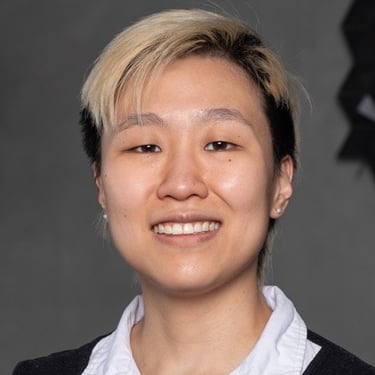
Jacqueline hong
Illustrator
MEDIUM: alcohol markers, pen, pencil
BIO: Jacqueline Hong is a psychiatrist, powerlifter, and emerging artist in Miami, FL who is inspired by cartoons, movies, videogames, psychology, and philosophy. She draws both simple cartoons and detailed illustrations, mixing the cute and humorous with the horrific and bizarre. She loves exploring deep topics and making sense of the world through art. She has presented in various digital spaces, magazines, and galleries.
INSTAGRAM: @WhichWayWorld
QUESTION 3. Your work often hints at unspoken truths rather than explicit narratives. How do you know when an image has revealed enough without explaining itself?
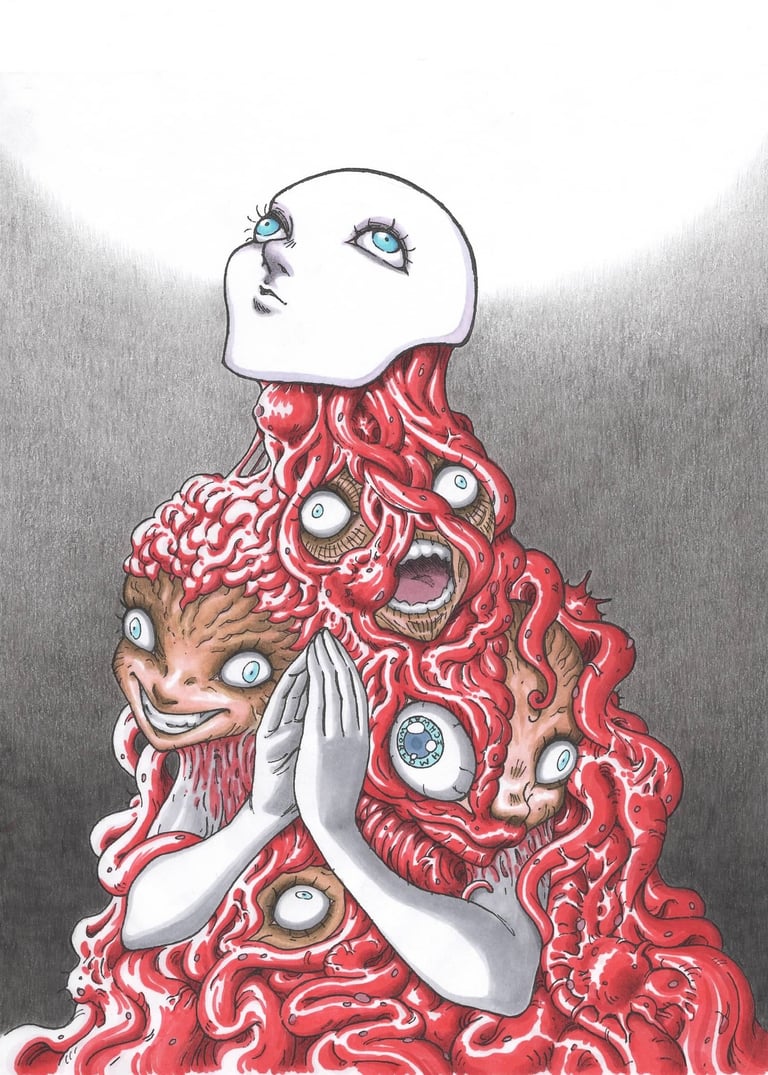
ANSWER 3. One of my favorite quotes is by D.W. Winnicott: “Artists are people driven by the tension between the desire to communicate and the desire to hide.” And another by Francis Bacon: “The job of the artist is always to deepen the mystery.” Regarding your statement about unspoken truths rather than explicit narratives in my art, I think that this applies to all real art. It is the difference between a pretty picture and true beauty. I personally find it ineffectual - even annoying - to have a book, movie, or piece of art tell me how I should interpret it as if I were a child. If the meaning of the picture can be stated clearly in a sentence, then it is not really art. It shouldn’t be screamed from a rooftop. At times, I’ve tried too hard to insert a theme or a message into my picture, but it doesn’t work out that well. You need a certain “looseness” with art that can’t be overly constrained, as if you were trying to draw a dream rather than real life. There have been several times where my unconscious seemed to know what I am trying to say before I was consciously aware of it. My picture “Metamorphosis” was actually made for a friend’s local art show. I didn’t put a significant amount of conscious effort into the theme at the time. All I knew was that I wanted to make something detailed and interesting - something worthy of my friend’s art show. Over the months, I found myself staring at it and then it suddenly hit me, “Oh my gosh! The picture is me!” I realized that the picture perfectly encapsulated the psychological struggles I was dealing with at the time, but wasn’t consciously aware of.
QUESTION 1. You balance a clinical psychiatric practice with making surreal, emotionally charged art. How does working so closely with the inner lives of others shape what you feel compelled to express visually?
ANSWER 1. I feel like my clinical and artistic backgrounds affect each other on multiple levels. Medicine is a very sterile, objective, and algorithmic discipline, which is in stark contrast to the fluid, undefined, and emotional practice of art. I used to try and run away from the former because it always seemed so opposite of who I was as a person, but over time I realized that there was indeed overlap between the two worlds. Psychiatry is often considered the most human, creative, and “right-brained” of the medical specialties, if that makes sense. Connecting with people on the deepest level and having them trust you with their emotions, secrets, and even trauma is such an incredible honor and privilege. Every day I witness the extremes in human joy, sadness, anger, and grief, and am blessed to be able to incorporate those stories and feelings into my art in a symbolic way. A lot of inspiration comes from my own background as well. Medical training was a difficult and depleting time in my life. There were two sides of me, vying for control: the dutiful scientist and the passionate artist. There was simply not enough time or energy for both. The scientist won temporarily, but the repression of the artist actually made my art richer, deeper, and more in-tune with my emotional state in the long-run. When I eventually did have time for art, I felt like the pain that I suffered in medical school enriched my art instead of taking away from it.
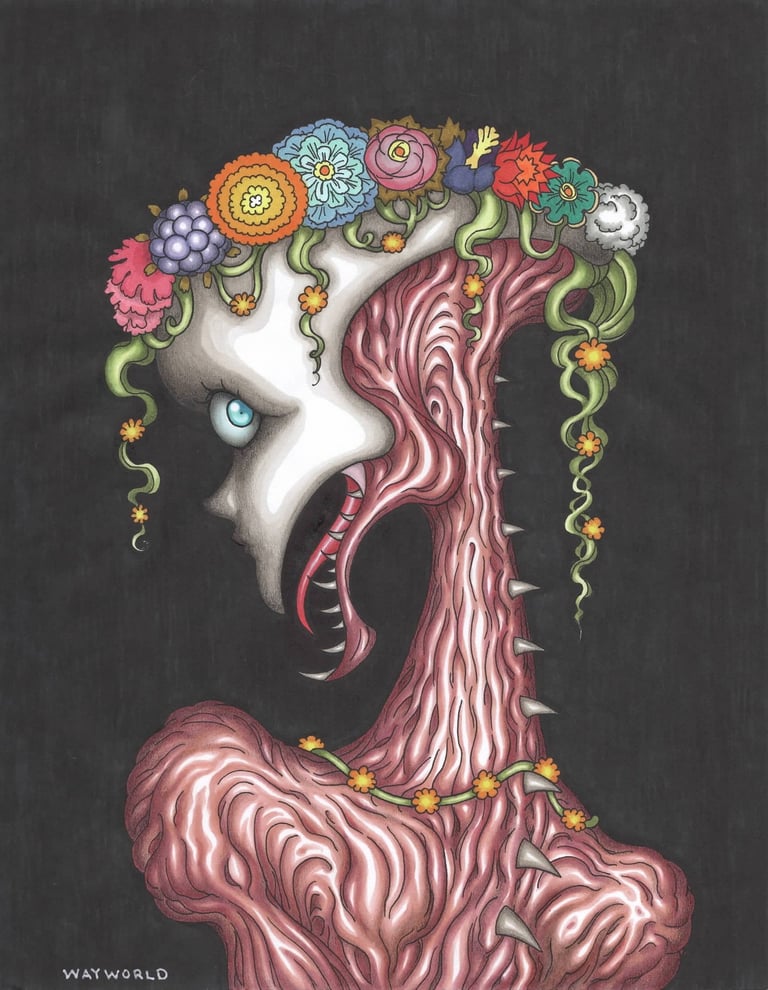
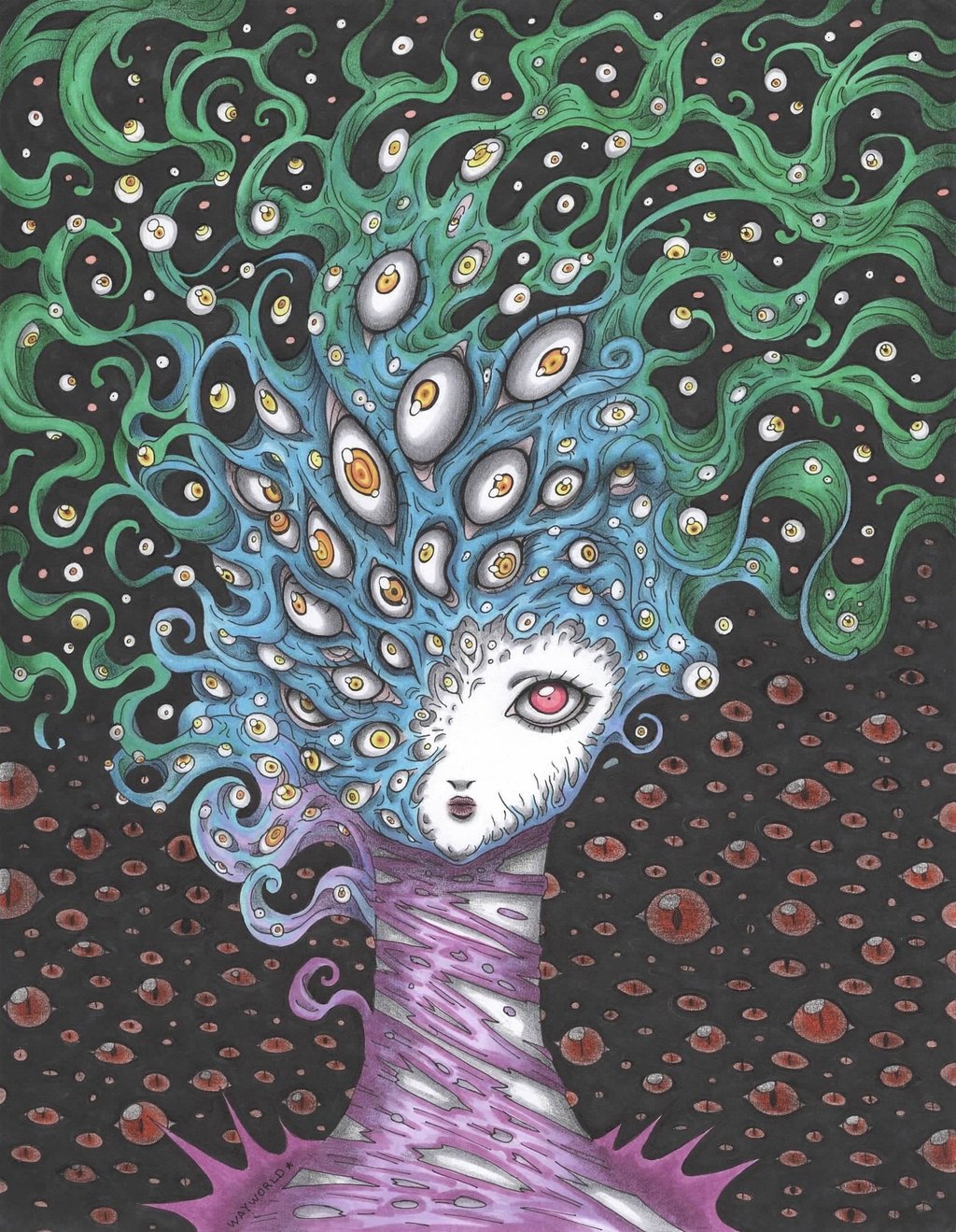
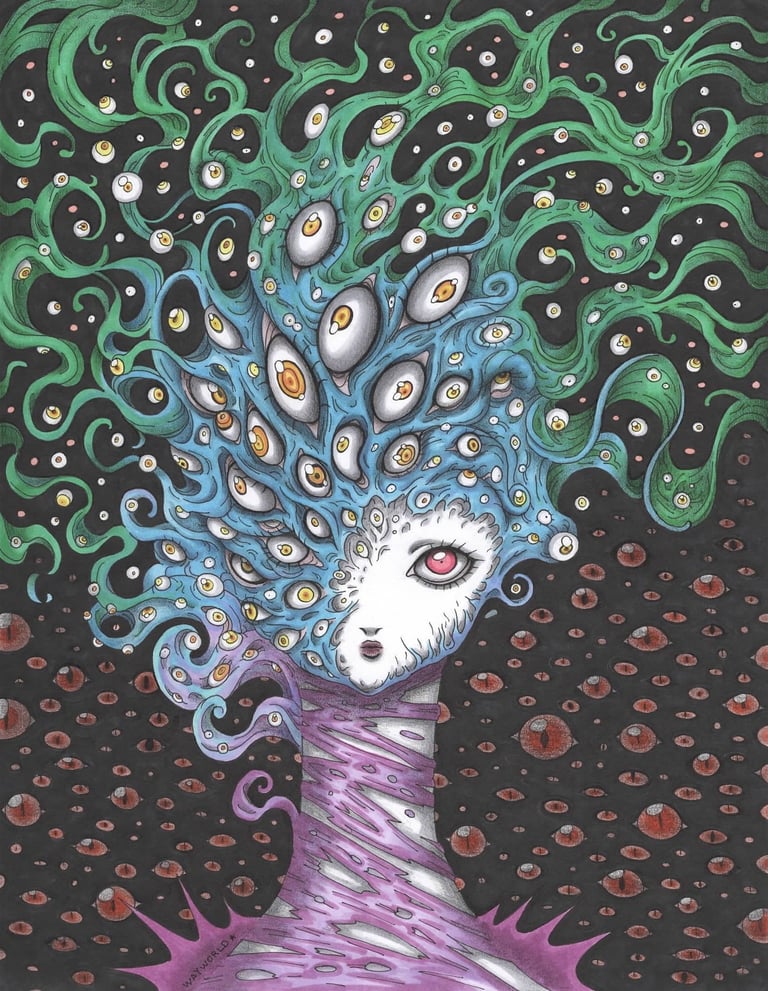
“Self-Portrait,” 2025, Mixed Media, 8.5x11 inches
All copyright and reproduction rights are reserved by Jacqueline Hong.
Artwork may not be reproduced in any form without the artist's express written permission.
CLICK IMAGE FOR FULL VIEW
CLICK IMAGE FOR FULL VIEW
CLICK IMAGE FOR FULL VIEW
“Delight to Delirium,” 2025, Mixed Media, 8.5x11 inches
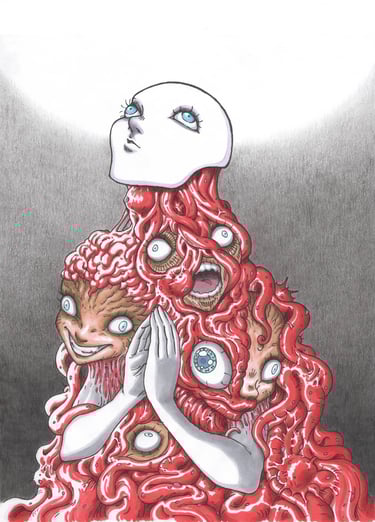
“Metamorphosis,” 2025, Mixed Media, 8.5x11 inches
All images and written materials on this website are protected intellectual property. All copyright and reproduction rights are reserved by KC Magrath.
Artwork may not be reproduced in any form without the artist's express written permission.
Any use of this content to train, develop, or operate generative artificial intelligence or machine-learning systems-whether commercial or non-commercial—is expressly prohibited without prior written permission.
Photos by KC Magrath are reduced in resolution and watermarked. Purchased images will be at the resolution listed in the store and without watermarks.
Purchased digital downloads are intended solely for personal use at the prices listed.
For commercial use or inquiries about designating a photo as a Limited Edition, please email.
Licensing Agreement.
Privacy Policy
Cookies Policy
Giveaway1 & Terms