Three by Three: Guest Artists in Focus
QUESTION 2. Printmaking is inherently repetitive and process-driven, yet your work feels deeply psychological and unresolved. How do you use repetition without allowing the work to become emotionally static?
ANSWER 2. For me, repetition in printmaking isn’t about sameness—it’s about searching. Each print, even from the same plate, carries a slightly different emotion or moment of thought. The process allows me to revisit an image like a memory that changes each time I return to it. Through layering, erasing, or overprinting, I explore the tension between control and surrender, certainty and doubt. The repetition becomes a dialogue with myself—a way of processing what still feels unresolved rather than fixing it. In that rhythm of doing and redoing, the work stays alive, allowing emotion to shift and breathe instead of becoming static or complete.
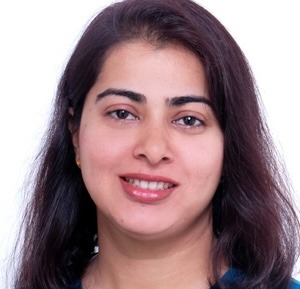
Niga Sayyed
Visual Artist
MEDIUM: mixed-media
BIO: Born and raised in Pakistan, I moved to Dubai about 19 years ago. I earned my Bachelor’s in Fine Arts (Printmaking) from the National College of Arts, Lahore, and later pursued my MFA (2016–2018) and PhD in Fine Arts and Art Conservation (2019–2022) from The Eugeniusz Geppert Academy of Art and Design in Wrocław, Poland. Now based in Dubai, UAE, I have taught as a Visiting Assistant Professor at the University of Sharjah and SUIT, Pakistan. My works have been exhibited internationally, including in the UAE, USA, Poland, Russia, China, Iran, Spain, Denmark, and Pakistan. My art is my voice—an exploration of identity, displacement, and the shared human experience.
INSTAGRAM: @NigaSayyed
QUESTION 3. Many of your works explore distorted perception—seeing meaning where none may exist. What do you hope viewers question about their own assumptions when encountering those visual ambiguities?
ANSWER 3. I’m interested in the moment when viewers realize they are actively constructing meaning rather than simply receiving it. When an image feels ambiguous or slightly unstable, it invites projection—personal memories, fears, cultural conditioning, and expectations begin to fill in the gaps. That moment of uncertainty is important to me.
Through these distortions, I hope viewers start to question how quickly they assign meaning, and how often those meanings are shaped by habit rather than reflection. I want them to notice their own impulse to make things legible, familiar, or comfortable, even when clarity isn’t actually present. Ideally, the work becomes a quiet mirror—one that asks not “What am I seeing?” but “Why am I seeing it this way?”
QUESTION 1. Living and working between Pakistan, the UAE, and Poland places you in constant cultural translation. How has prolonged migration changed the way you understand “belonging” as something fluid rather than fixed?
ANSWER 1. Living between Pakistan, the UAE, and Poland has changed how I see the idea of belonging. It’s no longer tied to one country or address—it’s something I carry within me. Each place has shaped me in a different way, leaving layers of language, emotion, and memory that now feel inseparable. Over the years, I’ve learned that home isn’t always where you’re from, but where you continue to grow and feel understood. Migration has made my identity softer around the edges, more open and fluid. It taught me that belonging can exist in many forms, and sometimes, in many places at once.
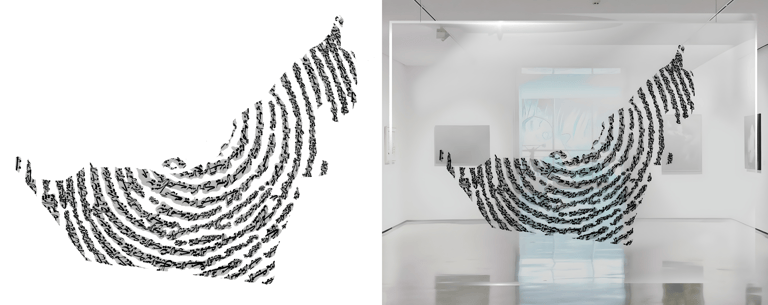
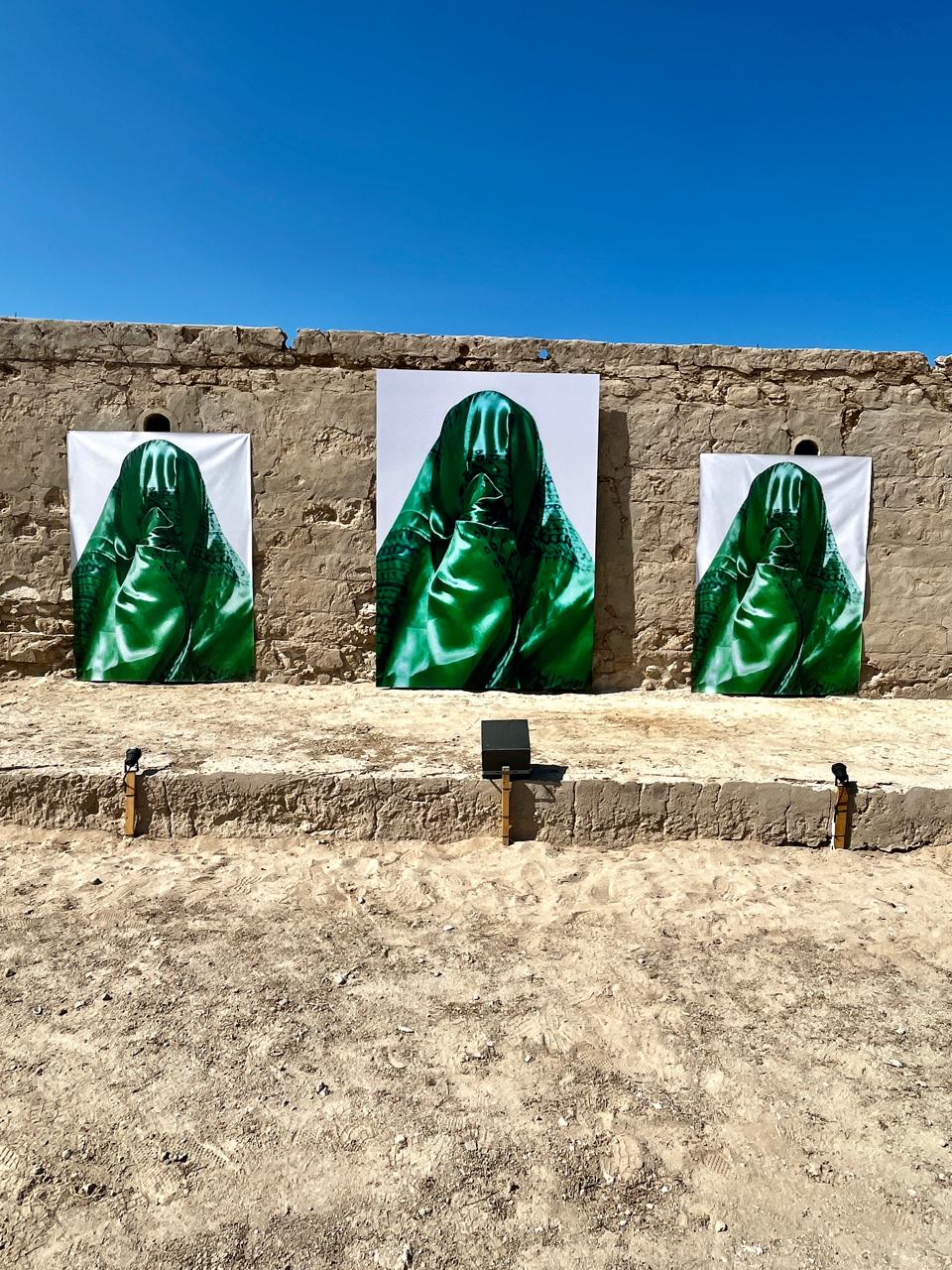
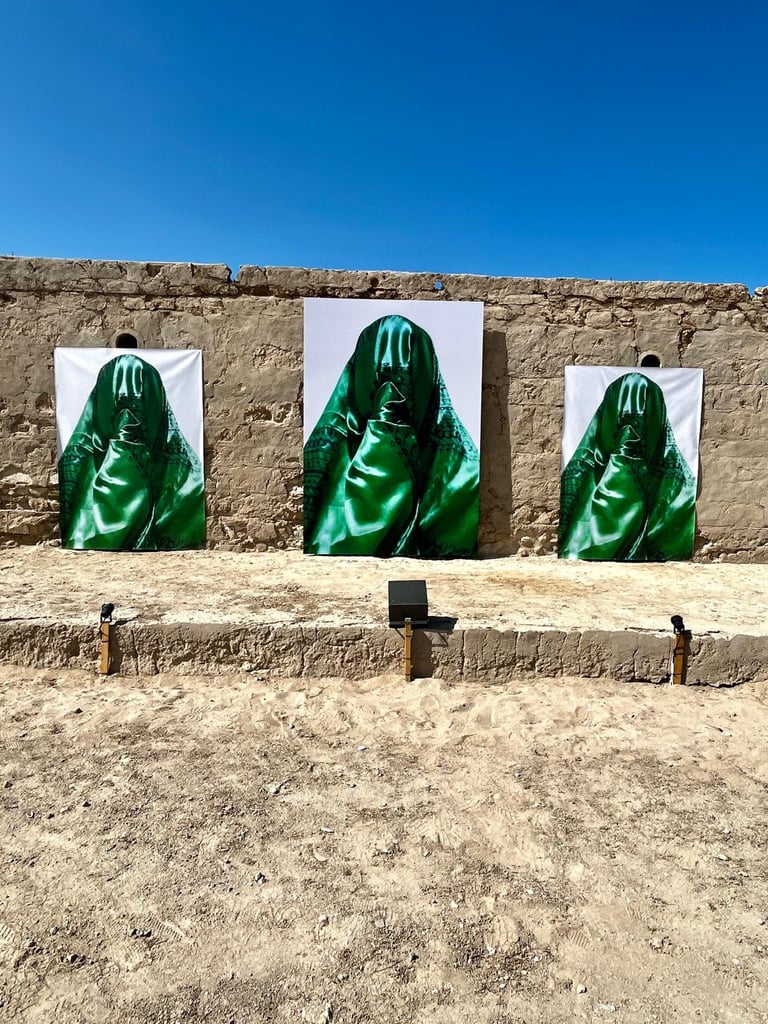
Echoes of Silence, 2025, photograph, 3 x 4 feet
No Boundaries - Teaser
Yeh Mera Ghar Hai (This Is My Home) , 2025, UV print on acrylic, 140 x 110 cm
All copyright and reproduction rights are reserved by Niga Sayyed.
Artwork may not be reproduced in any form without the artist's express written permission.
CLICK IMAGE FOR FULL VIEW
CLICK IMAGE FOR FULL VIEW
VIDEO
All images and written materials on this website are protected intellectual property. All copyright and reproduction rights are reserved by KC Magrath.
Artwork may not be reproduced in any form without the artist's express written permission.
Any use of this content to train, develop, or operate generative artificial intelligence or machine-learning systems-whether commercial or non-commercial—is expressly prohibited without prior written permission.
Photos by KC Magrath are reduced in resolution and watermarked. Purchased images will be at the resolution listed in the store and without watermarks.
Purchased digital downloads are intended solely for personal use at the prices listed.
For commercial use or inquiries about designating a photo as a Limited Edition, please email.
Licensing Agreement.
Privacy Policy
Cookies Policy
Giveaway1 & Terms