Three by Three: Guest Artists in Focus
QUESTION 2. Graduating from the École Nationale de Cirque’s TDEC program places you in a lineage of high-level circus creators. What did that environment challenge you to unlearn as much as master?
ANSWER 2. The most important lesson I've learned from training at Ecole Nationale de Cirque is that attitude is everything. In relation to everything and everyone. Your attitude will make or break you.
I've been at the school since I was 16. I left home to "join the circus," as my friends love to point out. But over all those years I've seen people come and go. The people who you see rising up the highest are the ones who never stop pushing. In every aspect of their art, they yearn for more. Artistically and technically, they are like sharks that never stop swimming. Never stop hunting for new ideas or movements. It's truly one of the most inspiring things to see someone work so hard for so long and then watch as the world welcomes them with open arms. Let me let you in on our schedules. We train easily 5 hours each day, with some days exceeding 8 hours. After all that training, we have academic classes that we MUST pass to graduate. And the cherry on top, after we graduate, we aren't guaranteed stable work ever. Injuries, visas, anything could take away something you planned years around. In a nutshell, it's a stressful, unpredictable life. But we as circus artists live for that.
When I first came to the school, I didn't have the tools in my emotional toolbelt to handle every little thing. But what I did have, and what I want everyone to have, is gratitude. "It is not joy that makes us grateful, it is gratitude that makes us joyful," - David Steindl-Rast. I remember watching a Steve Harvey clip when I first came to the school about how we don't have to get up every morning, but we get to get up every morning. That small YouTube short really changed my perspective on things. From then on, I got to do acro, I got to work out, etc. It was actually magical how much that little word "get" switched up my whole life. My first big injury really engraved this into me as well. I was rehearsing for an upcoming performance, and I sprained my ankle badly. Level 3 sprain, the sprain is so bad that I actually have a longer recovery time than if I were just to have broken it. This meant no more ladder, no more acro, basically no more of anything. I was super depressed for a couple of days. But then I flicked the switch and asked myself, "What can I do?" Immediately right there, I hobbled over to the juggling cubbies and picked up 5 balls. I had nothing better to do, actually; there was nothing better I could do. So, I juggled. Day after day, night after night. And eventually, once my ankle healed, I came out of it with a solid 5-ball cascade and a positive attitude..
The most important thing in anyone's life is how they act. And its completely a choice, so act positively. The people you surround yourself with will love it, and most importantly, you will love it.
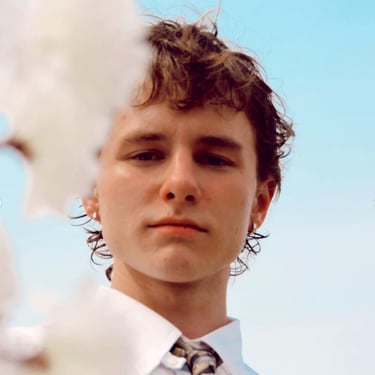
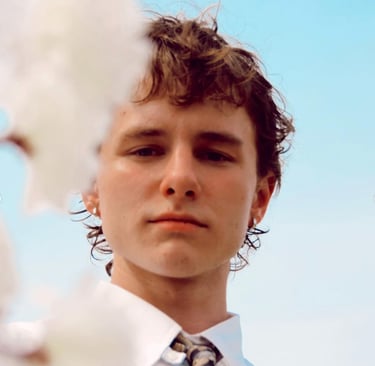
Lyndon Fraser
Circus Artist
BIO: I'm a stubborn guy with big ambitions. I'm from New York, and now I live in Montreal, QC. I live for ladder. It's what I think about when I wake up, and it makes sure I get to sleep on time. Every athlete can relate that there is nothing better than pushing yourself to the highest level possible. Ladder pushes your creative, mental, and physical sides all at the same time. And with pressure like that, diamonds are formed. My dreams are to perform internationally for thousands of people, and ultimately inspire people to pick up balancing ladder.
INSTAGRAM: @ly.dder
QUESTION 3. As you look toward collaborations and new stages, what kind of creative context allows your ladder work to evolve rather than repeat itself?
ANSWER 3. No two acts will ever be the same. Even if you perform the act 1000 times. But what will keep me doing that act is the people. Good people make good people (and so does good food). In my future work, I hope to be surrounded by honest and hardworking people. Just having that around me will keep me in the right direction. No matter where I am or what I am doing, I want to be surrounded by people who care for me as I care for them.
QUESTION 1. The acrobatic ladder is both partner and obstacle—unstable, rigid, and unforgiving. What drew you to a discipline where balance is never guaranteed, even for a moment?
ANSWER 1. "The ladder is an unforgiving, unemotional piece of aluminum that doesn't care if you fall or not," is what most people think when they see what I do. But it's not how I see it. Let's start with the material in which ladders are made, aluminum. Aluminum is a delicate and brittle material; too many bumps, drops, or bruises will surely cause a fracture. (Source: Experience) But this brittleness brings a sense of humanity into the equation. You feel for it, you want to take care of it, especially because its only you and the ladder. No one does ladder around me. So I feel this anthropomorphic obligation to take care of it and push the specialty as far technically as I can.
To me, the ladder is also a blank page. A hyper-traditional circus specialty barely touched by the contemporary hand. It was daunting going into what all my peers deemed one of the hardest specialties, without any reference material whatsoever. But I got over it and saw the true beauty of what would come to be my life. In my hyperactive mind, no reference material meant I got to create it all. I was going to be the acrobat that people look back on for tricks and research. Ralph Waldo Emerson said, "Do not go where the path may lead, go where there is no path and leave a trail." Obviously, he was talking about ladder, lol.
Every day, I am grateful to my willful soul for not letting go. There were times when training lulls turned from days to weeks. But as trampoline has so "graciously" taught me, "what goes down, will come back up, maybe in a different direction though," And that's exactly what happened. What people do understand, though, is that ladder is a game of strife. You versus gravity. But it's also an elegant dance between the soul and reality.
All copyright and reproduction rights are reserved by Lyndon Fraser.
Artwork may not be reproduced in any form without the artist's express written permission.
VIDEO
VIDEO
VIDEO


All images and written materials on this website are protected intellectual property. All copyright and reproduction rights are reserved by KC Magrath.
Artwork may not be reproduced in any form without the artist's express written permission.
Any use of this content to train, develop, or operate generative artificial intelligence or machine-learning systems-whether commercial or non-commercial—is expressly prohibited without prior written permission.
Photos by KC Magrath are reduced in resolution and watermarked. Purchased images will be at the resolution listed in the store and without watermarks.
Purchased digital downloads are intended solely for personal use at the prices listed.
For commercial use or inquiries about designating a photo as a Limited Edition, please email.
Licensing Agreement.
Privacy Policy
Cookies Policy
Giveaway1 & Terms