Three by Three: Guest Artists in Focus
QUESTION 2. Large-scale canvases invite the body into the experience. How does working at that physical scale change your relationship to gesture, control, and vulnerability?
ANSWER 2. I love painting big. I want to be physically inside the world I am creating, almost engulfed by it. Large-scale canvases let my whole body participate, not just my wrist or hand. My gestures become wider, freer and more instinctive, more like I am dancing as I paint. I am no minimalist when it comes to size, because the expansiveness allows emotion, rhythm and movement to exist at their fullest. For my audience, I want them to feel entirely captivated to enter the world of my work, and large-scale works act as this luring force. My dream is to keep painting bigger and bigger.
Working in such a large scale also invites risk. There is nowhere to hide, and every decision is visible. I have to surrender control at times and trust the process, which can feel vulnerable but this makes me feel most alive. Mistakes become part of the history of the surface instead of something to erase. The physicality, the reach, the layering, the stepping back and re-entering all create a conversation between my body and the canvas. That sense of immersion is exactly why I love painting.
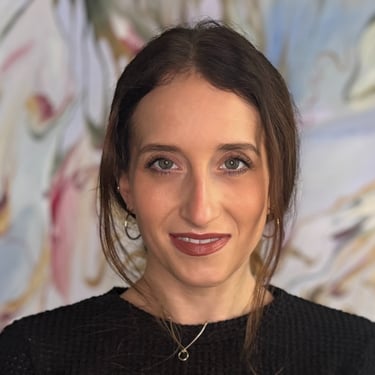
Rachel Berkowitz
Painter & Photographer
MEDIUM: oil on linen, acrylic on canvas
BIO: Rachel Berkowitz is a multidisciplinary artist working across painting, photography and performance. Raised in London and now based in Los Angeles, she creates luminous, emotionally driven works that explore nature, light, femininity and states of inner transformation. Her practice bridges classical art influences with contemporary color and movement, inviting viewers into worlds of softness, celebration and emotional sanctuary.
A UCLA Fine Art graduate, Berkowitz has exhibited widely across the United States and Europe, completed international residencies including the La Napoule Art Foundation, and presented live performance works at fashion and cultural events worldwide. She also directs æsthetíque studio in downtown Los Angeles, a creative hub for art education, community gatherings and experimental performance.
In an increasingly digital world, Berkowitz is deeply committed to the physical act of painting. She values the presence, texture and humanity of hand-made work and intentionally resists the rise of AI-generated imagery, believing that art created through lived experience carries irreplaceable emotional truth. Her ongoing series, “Life is Soirée,” reimagines Rococo softness through a contemporary feminine lens, celebrating beauty, leisure and the joy of simply being alive.
INSTAGRAM: @RachelBerkowitzArt
QUESTION 3. Alongside your fine art practice, you also photograph weddings—intimate, emotionally charged, real-time events. What does moving between staged abstraction and unscripted human moments teach you about presence and attention?
ANSWER 3. Photographing weddings feels completely aligned with my work, because I am endlessly drawn to celebrations, gatherings and the way love brings people together. Being present at those intimate moments allows me to witness real emotion unfolding in real time, and I use my artistic eye to capture not only what is happening, but the feeling of it. Some images lean more abstract "essence"-driven, while others are pure beauty, but all of them carry atmosphere, color, composition in a way that expresses feeling.
Weddings also demand total presence, which is always a fun challenge. I have to move quickly, anticipate gestures and be in the right place at the right time, while staying invisible within the moment. I shoot on a Pentax 645Z, a medium format camera that I operate fully manually. It slows me down just enough to be intentional and precise, which heightens my awareness of light, framing and emotion. The camera becomes an extension of my eye.
Moving between staged abstraction in my paintings and unscripted human moments in weddings in real-time reminds me that attention is both instinctive and trained. In both spaces, I am looking for moments of connection, beauty and energy. One world is constructed, the other unfolds naturally, but they both feed the same desire in me: to honor life as it happens and transform it into something luminous and memorable.
QUESTION 1. Your work moves fluidly between abstraction, photography, and performance. What does shifting between those practices reveal to you about repetition, contrast, or rhythm across your body of work?
ANSWER 1. Moving between abstraction, photography and performance makes me deeply aware of rhythm across my work. Each medium has its own tempo, yet they always return to the same emotional language. Photography lets me compose through observation, noticing patterns, harmonies and forms exactly as they appear in my controlled vision in the real world. Painting opens the opposite space. It allows what I see to dissolve into gesture and atmosphere, where memory and feeling become fluid. Fragments from photographs often re-emerge in the paintings as looser echoes, like memories softening into abstraction.
Performance adds the body to that dialogue. When I paint live or perform “Interlace” ("Interlace" is a performance where I live paint onto a dress that a singer/performer is wearing during the performance) the act becomes choreography, and repeated motions create visual rhythms that mirror dance. Dancing, for me is when I feel the most free. The repetition of movement when I paint feels meditative rather than mechanical. Moving between mediums shows me that the same themes keep resurfacing: movement, contrast, pleasure and presence. It reminds me that my practice is less about any single medium and more about building emotional worlds that feel alive and evolving.
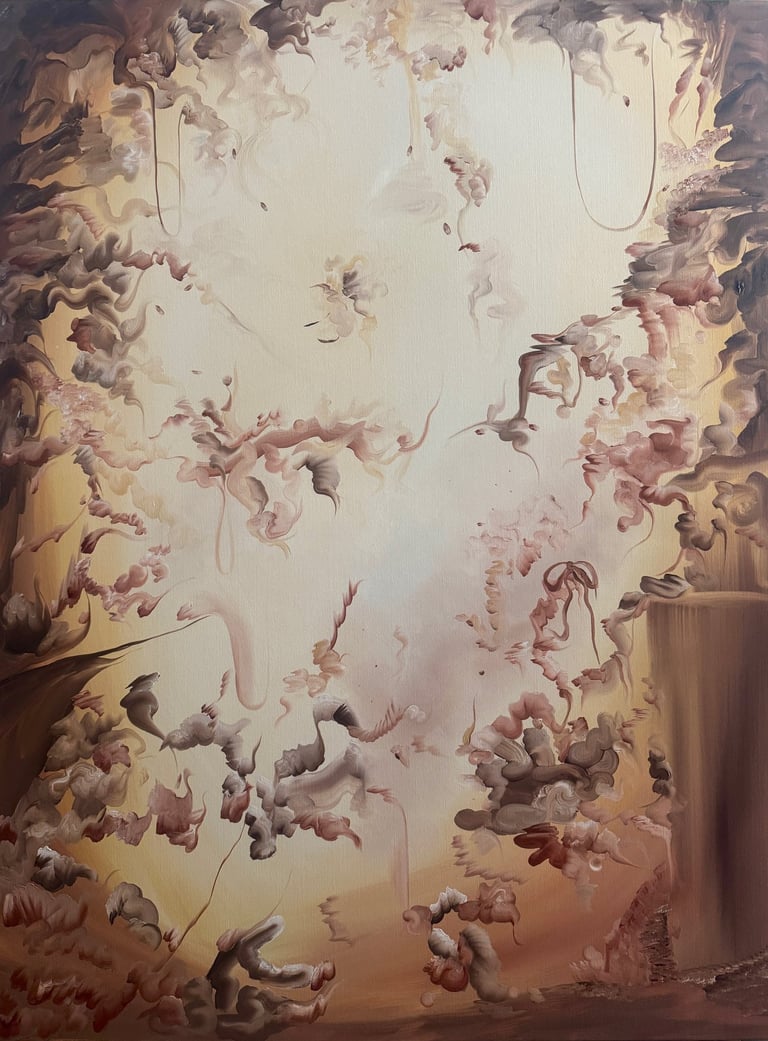
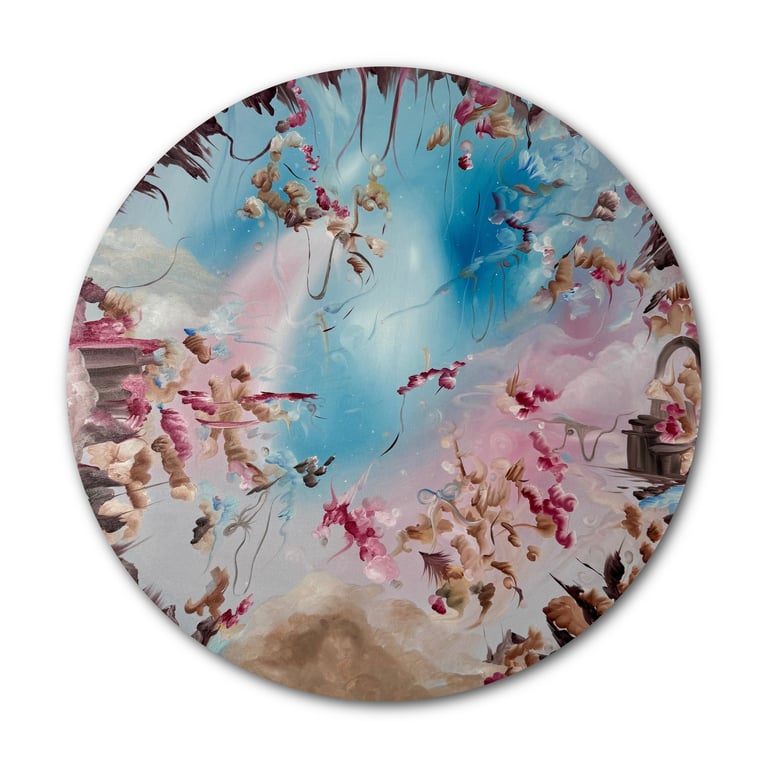
"Suspended Celebration", oil on canvas, 30" x 30", 2025
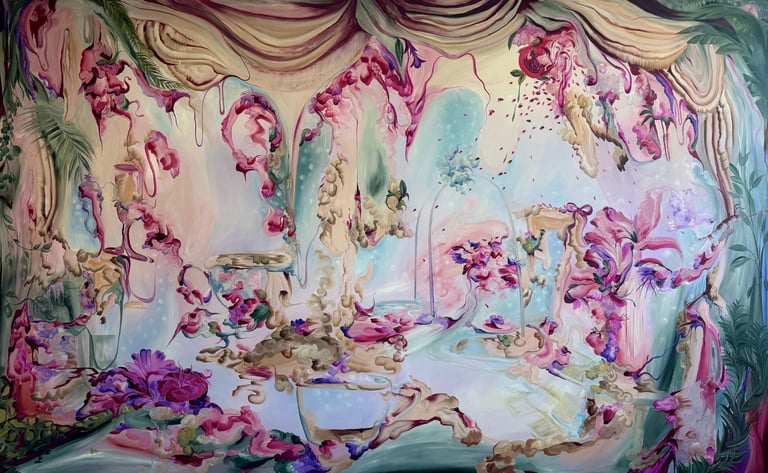
"High Tea Soiree", oil on linen, 60" x 96", 2025
"Golden Hour Soiree", oil on canvas, 48" x 36", 2025
All copyright and reproduction rights are reserved by Rachel Berkowitz.
Artwork may not be reproduced in any form without the artist's express written permission.
CLICK IMAGE FOR FULL VIEW
CLICK IMAGE FOR FULL VIEW
CLICK IMAGE FOR FULL VIEW