Three by Three: Guest Artists in Focus
QUESTION 2. Haiku demands restraint, yet your book feels playful and exploratory. How do you balance formal discipline with curiosity and experimentation?
ANSWER 2. The core of haiku is to find a 'haiku moment' where you are present and notice the power of your current awareness, typically and historically through nature. Then comes the matter of using discipline while organizing it into a poem that meets my aesthetic approach to haiku with my own defined voice... I believe the only way to be disciplined with your haiku practice is to just write more haiku! I am sure this sounds a bit trite but there is no way to master something enough to have the confidence to play around with it, without lots of trial and error. You must know the form and the essence of haiku in order to break, bend and tweak the rules.
In terms of exploration, I think haiku can be used to interpret more facets of life than is what is typically thought of as "nature". If you are in the grocery store and a fruit fly lands on you, you have interacted with nature and perhaps had a "haiku moment" within a commercial, materialist capitalist space. I’m interested in exploring those intersections, where the “natural” meets the constructed or commodified world. Maybe I am the natural animal amidst coworkers mingling at the water cooler.
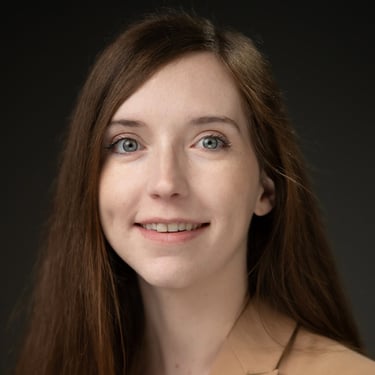
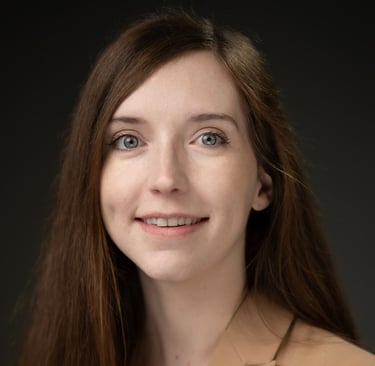
Shannon Wallace
Collagist, Painter, Poet
MEDIUM: mixed-media, found/recycled paper and plastic collage, watercolor, acrylic, conceptual sculpture, haiku, micropoems, visual poems
BIO: Shannon Wallace is a Canadian-American artist and poet based in Ontario. She holds a BA in English and Art from the University of Toronto (2022). Her work has been exhibited internationally and across Canada, including at the University of Western Ontario, Visual Arts Mississauga, Joshua Creek Heritage Art Centre, Dignam Gallery, Northern Contemporary, Propeller Art Gallery, Gallery 1313, Back Alley Gallery, Part Crowd Art Gallery, Omnibus Gallery (Germany), the Kolaj Institute (USA), CICA Museum (South Korea), and The Wrong Biennale.
Working across digital photo editing, mixed-media collage, sculpture, artist trading cards, and experimental formats, Wallace explores the tension between figuration and abstraction. She is drawn to the sensory and mnemonic power of texture—the threshold where images dissolve into gesture, memory, and atmosphere.
Her poetry has appeared in numerous anthologies, including Coming of Age in Florida, SHHH! Breathe Slow!, Ache: The Body’s Experience of Religion, Moonbeams and Marshmallow Dreams, Seashores: An International Journal to Share the Spirit of Haiku, and Whispers of the Seasons: A Contemporary Haiku Anthology. Her first standalone chapbook, Mossy Alley, was published in December 2025.
The reincarnation of a physical artwork into various virtual possibilities is a theme I've often returned to as I explore techspressionism and digitizing the abstract. I believe that you must have a soul in order to reincarnate an artwork, otherwise AI is simply reworking human-designed artwork again and again.
INTAGRAM: @AmethystDitch
QUESTION 3. With your recent haiku/art book expanding your interdisciplinary approach, what excites you most about where your practice is heading next—not in scale, but in depth?
ANSWER 3. For my next literary project, I want to move away from haiku (depending on my book sales... haha) and focus in on what I view as a key development in current North American culture: toxic positive femininity. A seminal text in my life was White Oleander by Janet Fitch which deals with themes of motherhood, mentorship, abandonment and a maternal figure that wants to guide but doesn't know how to lead a daughter in a "man's world". I’m fascinated by the ways our globalized culture mirrors this dynamic. We talk endlessly about emotional openness and sensitivity, yet feminine leadership remains strangely absent in relationships, families, corporations, and politics. I’m curious about what emerges when emotional discourse increases while women’s collective tangible power remains unchanged outside of financial independence, employment, or opting out of motherhood.
As I develop the idea for a future novel, I’m considering rereading Orwell’s 1984 and imagining what a “Big Sister” society might look like... One shaped by competitive corporate femininity, beauty requiring excessive labor, commodified self-improvement, bimboification, and the pressure to perform hypersexuality. Where is the solidarity among women in this environment? Who benefits when viewable performative softness is celebrated but real weaponizable agency is not?
But as always with writers and poets, what we set out to create and what we end up with are often two very different things.
QUESTION 1. You pair haiku with collage-like illustrations made from doodads, fabric, and scrapbook materials. How does assembling visual fragments influence the way you shape language on the page?
ANSWER 1. From my earlier studies, I double-majored in English Literature and Art/Art History. I have found it bizarre that literature and art were separated when artistic movements had written manifestos and were developed through speaking and writing. To deny language's influence on art is to ignore the artist's thoughts and words when they were in the process of creation. This is another reason why I like to hone in and use my real authentic human voice instead of using generative AI to have an inhuman machine teach me how to speak.
I have always been drawn to ekphrasis, to create art based on another piece of art is to fully engage with art history and the material world. As haiku cuts down unneeded words and grammar, I find myself wanting to do the same with the colors, shapes and sentiments that inspired the haiku. As haiku books often look sparse with such a short poem per page and margins filled with emptiness, I wanted to consider how that space can be utilized to enhance and magnify the haiku. Throughout Mossy Alley, the artworks deepen and embolden the haiku --- They function as a diptych: two halves of a single experience, each deepening the other.
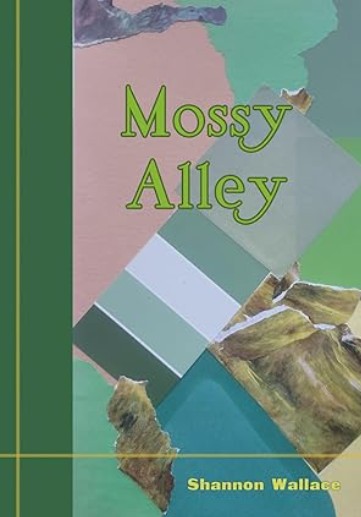
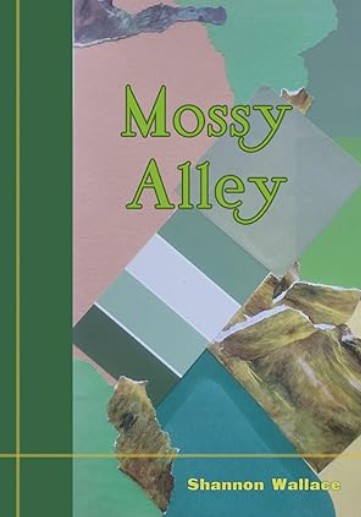
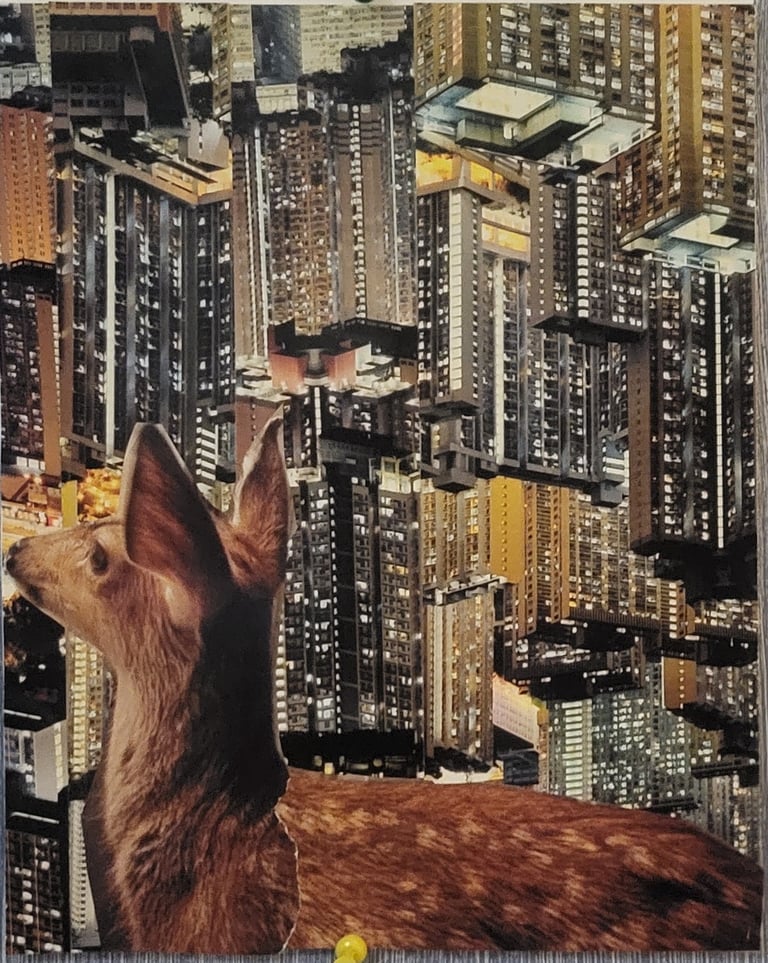
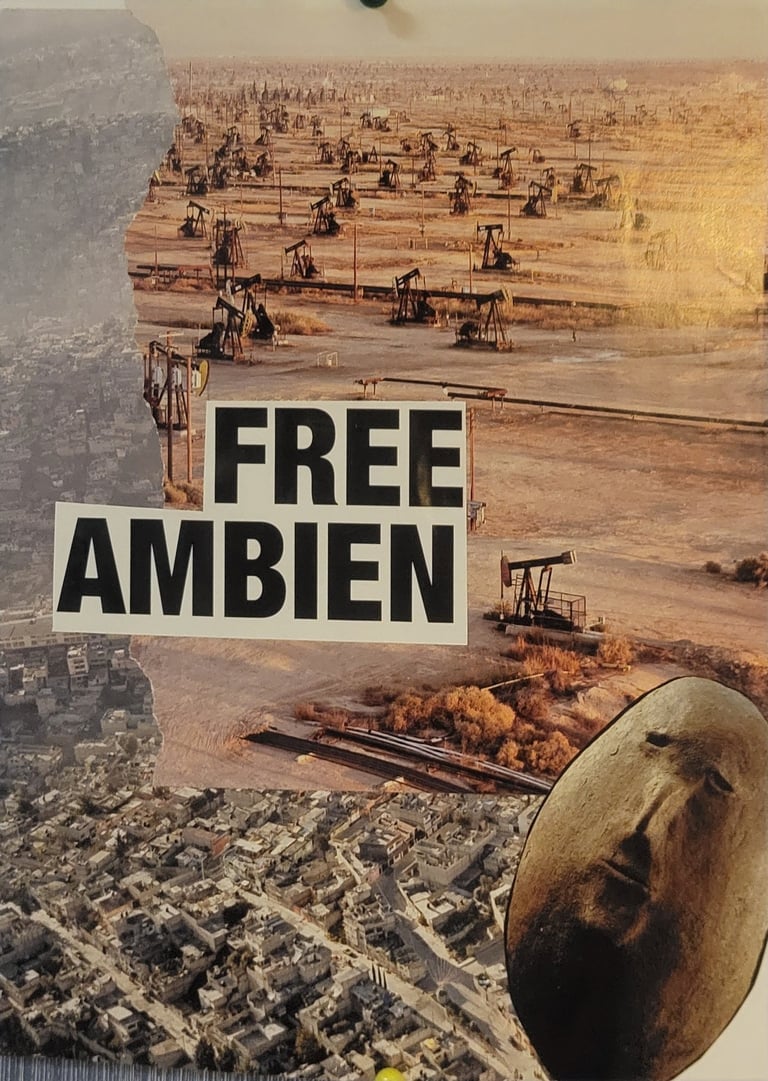

Mossy Alley by Shannon Wallace is an original poetry and collage chapbook released in December, 2025.
All copyright and reproduction rights are reserved by Shannon Wallace.
Artwork may not be reproduced in any form without the artist's express written permission.
CLICK IMAGE FOR FULL VIEW
CLICK IMAGE FOR FULL VIEW
CLICK IMAGE FOR FULL VIEW
Fawn for the City, 9.5" x 7.5", Collage on board, 2025
Complacent Citizens Won't Revolt, 9.5" x 7.5", Collage on board, 2025